
Most of the short profiles of laureates in the blue boxes in the individual laureate’s pages have been abridged to 50 words. “Inessential” words have been intentionally omitted. This has been done to keep the length of list pages as short as possible. Thank you for your consideration.

Painting Tim Tompkins – PaintHistory.com
James P. Allison Ph.D.
The Nobel Prize in Physiology or Medicine 2018
Nobel co-recipient Tasuku Honjo
Cancer Immunologist. Discovered cancer therapy by inhibition of
negative immune regulation. Pioneer. Place breaks/check points on
inhibitory immune cells to attack cancer cells –
curative. Interest: How T cells work. First Nobel Prize for cancer
therapy. Family history of cancer. Modest.
“Motivation of scientists: to know what nobody else knows.”
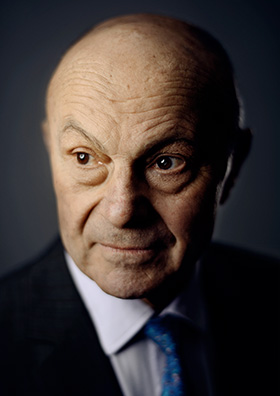
Photo: © Nobel Foundation
Eugene F. Fama Ph.D., MBA
The Sveriges Riksbank Prize in Economics Sciences in Memory of Alfred Nobel 2013
Nobel co-recipients Lars Peter Hansen, Robert J. Shiller
Economist. Empirical analysis of asset prices. Influenced
development of index funds. Father of modern finance. Idea is ‘how do
you measure risk?’ Windsurfing, golf, opera.
In University of Chicago – Economics. Environment so productive.
“We have good people, you need that; very interactive environment;
people help one another out a lot. I couldn’t do what I did without the
help of my professors, colleagues and students. Everybody contributes to
everybody else.”

Photo: Bengt Nyman, Painting Tim Tompkins – PaintHistory.com
Robert J. Lefkowitz MD
Nobel Prize in Chemistry 2012
National Medal of Science – Biological Sciences 2007 USA
Nobel co-recipient Brian K. Kobilka
Physician- Cardiologist, Scientist. G-protein-coupled receptors;
approximately half of all medicines used today use this kind of receptor.
“Strong family history of coronary artery disease … at age 50 I
had quadruple bypass surgery [1994]. I minimize my risk factors with
daily physical exercise, a vegetarian diet and appropriate medications”.

Photo Deryck Chan, courtesy to cameraman Sien Yi Tan. Painting Tim Tompkins – PaintHistory,com
Sir John B. Gurdon Kt DPhil DSc FRS
The Nobel Prize in Physiology or Medicine 2012
Nobel co-recipient Shinya Yamanaka
Developmental
Biologist. Mature cells can be reprogrammed to become pluripotent.
Hobbies: Outdoor sports, mountaineering, travelling, but not theatre,
music, reading.
At age15, damning school report: …he will not listen, but will insist
in doing his work his own way…has ideas of becoming a Scientist…waste of
time for him and teachers.
`Know Thyself

Photo: Jon Styer/Eastern Mennonite University/Wikipedia Commons
Leymah Gbowee MA [Major: Conflict Transformation]
Nobel Peace Prize 2011
Nobel Co-recipients Ellen Johnson Sirleaf, Tawakkol Karman
Liberian
peace activist, social worker, women’s rights advocate. Brought
together Christian and Muslim women in a nonviolent movement that played
a pivotal role in ending Liberia’s civil war. Founder, Gbowee Peace
Foundation Africa.
“Went from being an angry, broke, virtually homeless, 25-year-old mother to listening to the voice of God.”
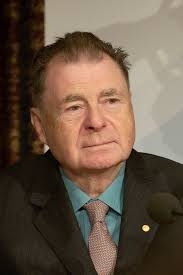
Photo: Holger Motzkau/Wikimedia Commons
Richard F. Heck Ph.D.
Nobel Prize in Chemistry 2010
Nobel co-recipients Ei-ichi Negishizz, Akira Suzuki
Physical organic chemist. Palladium-catalyzed cross-coupling
reaction. Sole author – 7 consecutive papers. Heck reaction: important
concept, tool for organic and medicinal chemists; fuorescence labeling
of DNA bases – sequencing DNA/Genome. Thinner computer screens in
future. “Great art in test tube.”
Growing orchids in early teens lead to passion for chemistry.

Photo U Montan nobelprize.org. Painting Tim Tompkins – PaintHistory.com
Ei-ichi Negishi
The Nobel Prize in Chemistry 2010
Nobel Co recipients Richard F. Heck, Akira Suzuki
Organic Chemist. Inventor of organozinc variant of the palladium catalyzed cross-coupling reaction. Read voraciously including “how to …” publications. Dreamt of Nobel half century prior to being awarded prize. Upon arriving in US and discovering Nobelists visiting UPenn, realized that being awarded the Nobel could happen to anybody including himself.

Photo U. Montan nobelprize.org. Painting Tim Tompkins – PaintHistory.com
Akira Suzuki Ph.D.
The Nobel Prize in Chemistry 2010
Nobel Co recipients Richard F. Heck, Ei-ichi Negishi
Organic chemist. Inventor of boron version of
palladium-catalyzed cross-coupling reaction. Investigated
stereochemistry of hydroboration reaction. Suzuki reaction kept
evolving. Became interested in organic chemistry after reading textbook.
“There were difficult and joyful periods. Memories of tough, trying
experiences tend to fade with time. Now I think mainly about fun
things.”

Photo © Holger Motzkau. Painting Tim Tompkins – PaintHistory.com
Elinor Ostrom
The Sveriges Riksbank Prize in Economic Sciences in Memory of Alfred Nobel 2009
Co-nobelists: Oliver E. Williamson
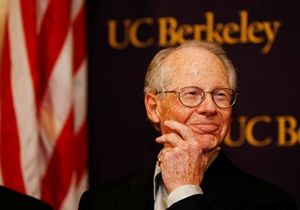
Photo: Courtesy Dr.Williamson
Oliver E. Williamson Ph.D.
The Sveriges Riksbank Prize in Economic Sciences in Memory of Alfred Nobel 2009
Nobel co-recipient Elinor Ostrom
Economist and Founding Editor of the Journal of Law, Economics and Organization. His book, The Economic Institutions of Capitalism: Firms, Markets, Relational Contracting, is said to be the most frequently cited work in social science research.

Photo George M. Bergman, MFO. Painting Tim Tompkins – PaintHistory.com
David Mumford Ph.D.
National Medal of Science – Mathematics and Computer Science 2009
Mathematician. Algebraic geometry, Vision and Pattern Theory. Pure
and Applied math. History and Philosophy of math, Math education.
Sailing.
“Research enterprise depends on the free dissemination of scholarly material.
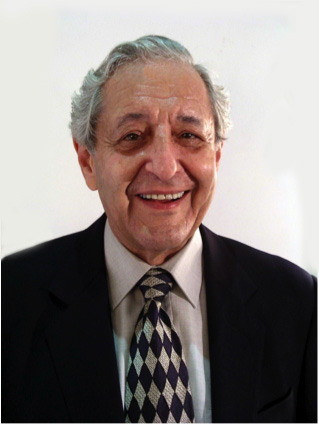
Photo: LN, NIMH
Mortimer Mishkin Ph.D.
National Medal of Science – Behaviorial and Social Science 2009
Cognitive neuroscientist, Business Administrator. Brain/behavior
relationships in humans, nonhuman primates. Identified … areas in
cerebral cortex essential for perception and memory: cortico-limbic
circuit responsible for memory of facts and events; cortico-striatal
circuit responsible for learning of different types of habits and motor
skills.
“Perseverance is built into the trait of curiosity, a scientist’s
motivation. If you’re sufficiently curious, you’re willing to continue
despite failures and obstacles. It’s so easy to give up.”

Photo: US Government/Wikipedia
Paul Krugman
The Sveriges Riksbank Prize in Economic Sciences in Memory of Alfred Nobel 2008
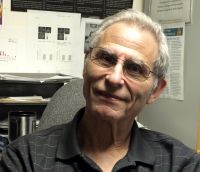
Photo: Courtesy Dr. Michael I. Posner. Upon receiving Carty award 2012.
Michael I. Posner Ph.D.
National Medal of Science – Behaviorial and Social Science 2008
Psychologist. Cognitive neuroscience – attention, early brain development, changes in brain systems with learning; developmental disorders; brain injury. Posner cueing task. Founding Director, Sackler Institute for Developmental Psychobiology.
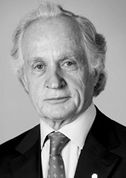
Photo: © Nobel Foundation
Mario R. Capecchi Ph.D.
The Nobel Prize in Physiology or Medicine 2007
Nobel prize also awarded to Sir Martin J. Evans and Oliver Smithies
National Medal of Science – Biological Sciences 2001
Molecular
Geneticist. Introduced specific gene modifications in mice by using
embryonic stem cells. Gene Targeting, Homeobox Genes, Development,
Behavior.
Mother incarcerated as political prisoner, Germany. “At age 4½, I
set off on my own, living in streets, orphanages; joining gangs of
homeless children; generally hungry. Vivid recollections, brutal beyond
description.”
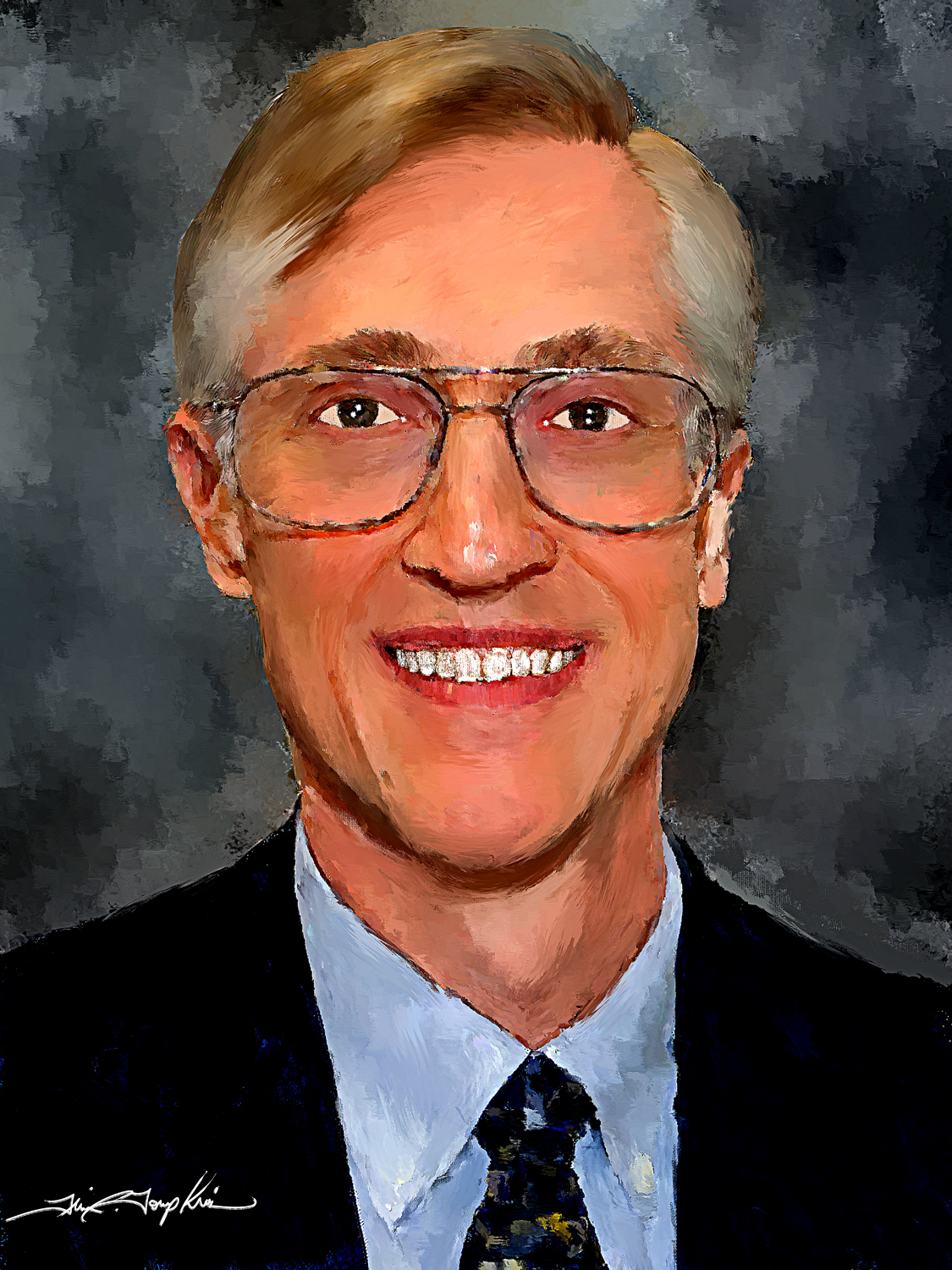
Painting Tim Tompkins – PaintHistory.org
John C. Mather Ph.D.
The Nobel Prize in Physics 2006
Nobel Prize also awarded to George F. Smoot
Physicist – Astrophysics, Instrumentation. COBE, Blackbody form and anisotropy of the cosmic microwave background radiation.
“For years I had successfully repelled all challenges to my
concentration on one overwhelming responsibility. Now, it was done, and I
switched my attention to …”

Photo: Courtesy Nina Fedoroff. Credit: Douglas Mills, New York Times
Nina V. Fedoroff Ph.D.
National Medal of Science – Biological Sciences 2006
Plant Molecular Biologist. Geneticist. First to clone and characterize maize transposons. Founding director, Huck Institutes of the Life Sciences. Interests: Education, Public Policy.
“It’s as much wanting to succeed as it is to using your brains. I’ve seen very bright people fall out of the system”.
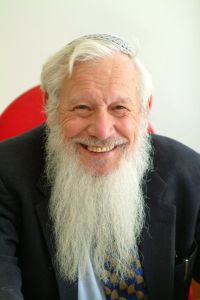
Photo: Courtesy Dr. Robert J. Aumann
Robert J. Aumann Ph.D.
The Sveriges Riksbank Prize in Economic Sciences in Memory of Alfred Nobel 2005
Nobel co-recipient Thomas C. Schelling
Mathematician. Game Theory. Interest: Talmud.
“Science is exploration for the sake of exploration.”

Photo: US Govt./Wikipedia
Thomas C. Schelling
The Sveriges Riksbank Prize in Economic Sciences in Memory of Alfred Nobel 2005
Co-nobelists: Robert J. Aumann

Photo: Courtesy Dr. Gordon Bower
Gordon H. Bower Ph.D.
National Medal of Science – Behavior and Social Science 2005
“Psychologist, Cognitive-Social. Human memory, mnemonic devices, retrieval strategies, recording strategies, category learning. Cognitive processes, emotion, imagery, language and reading comprehension as they relate to memory. Mathematical Models, Computer Simulation of Memory, Behavior Modification.”
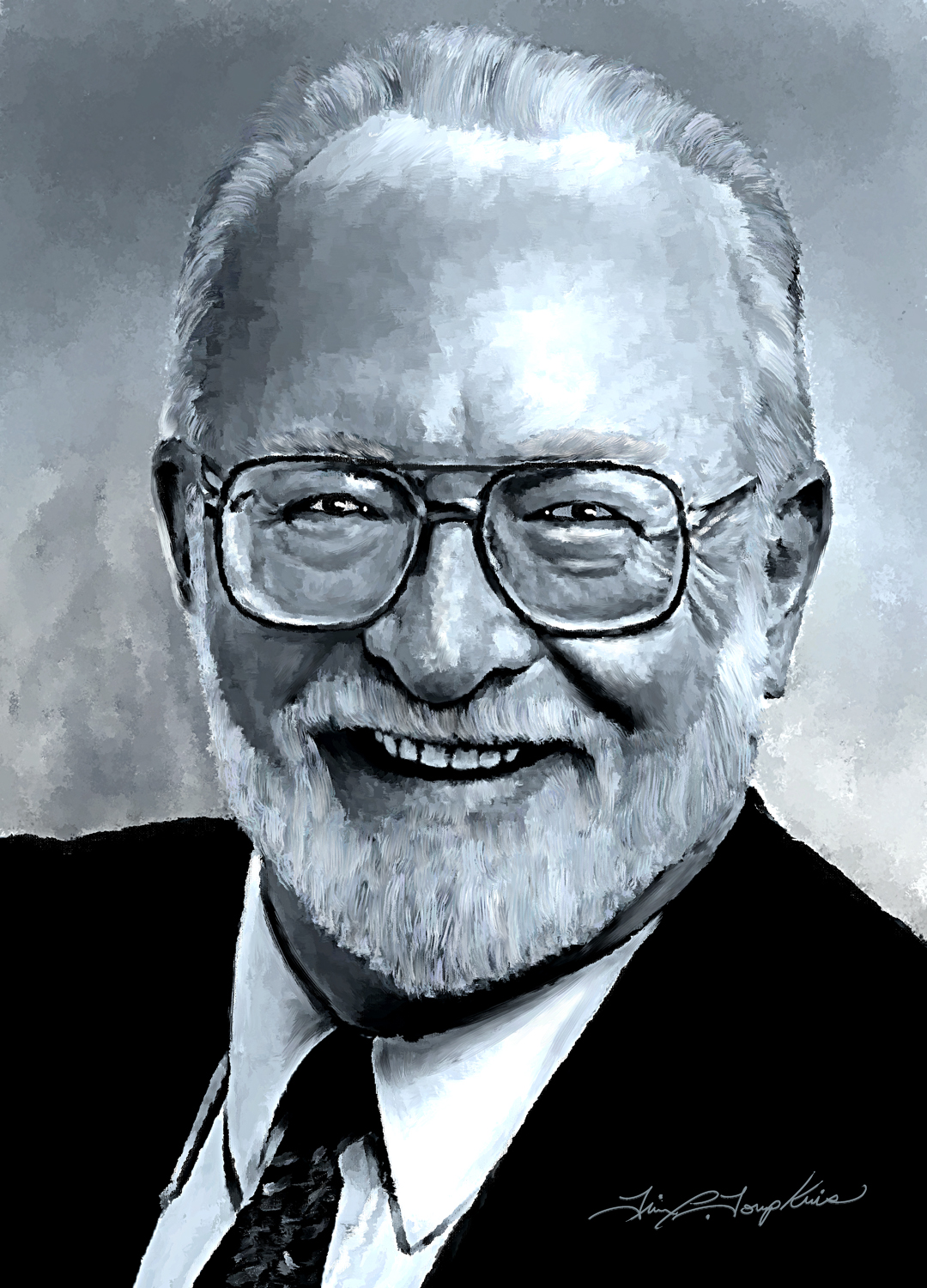
Painting Tim Tompkins – PaintHistory.com
Paul C. Lauterbur Ph.D.
The Nobel Prize in Physiology or Medicine 2003
Nobel Co-recipient Sir Peter Mansfield
The President’s National Medal of Science – Physical Sciences 1987
The National Medal of Technology and Innovation 1988
Chemist. Magnetic resonance imaging.
“Every great idea in history has the red stamp of rejection on
its face. If you scratch any innovation’s surface, you’ll find the
scars: they’ve been roughed up and thrashed around by the masses and the
leading minds before they made it into your life.”
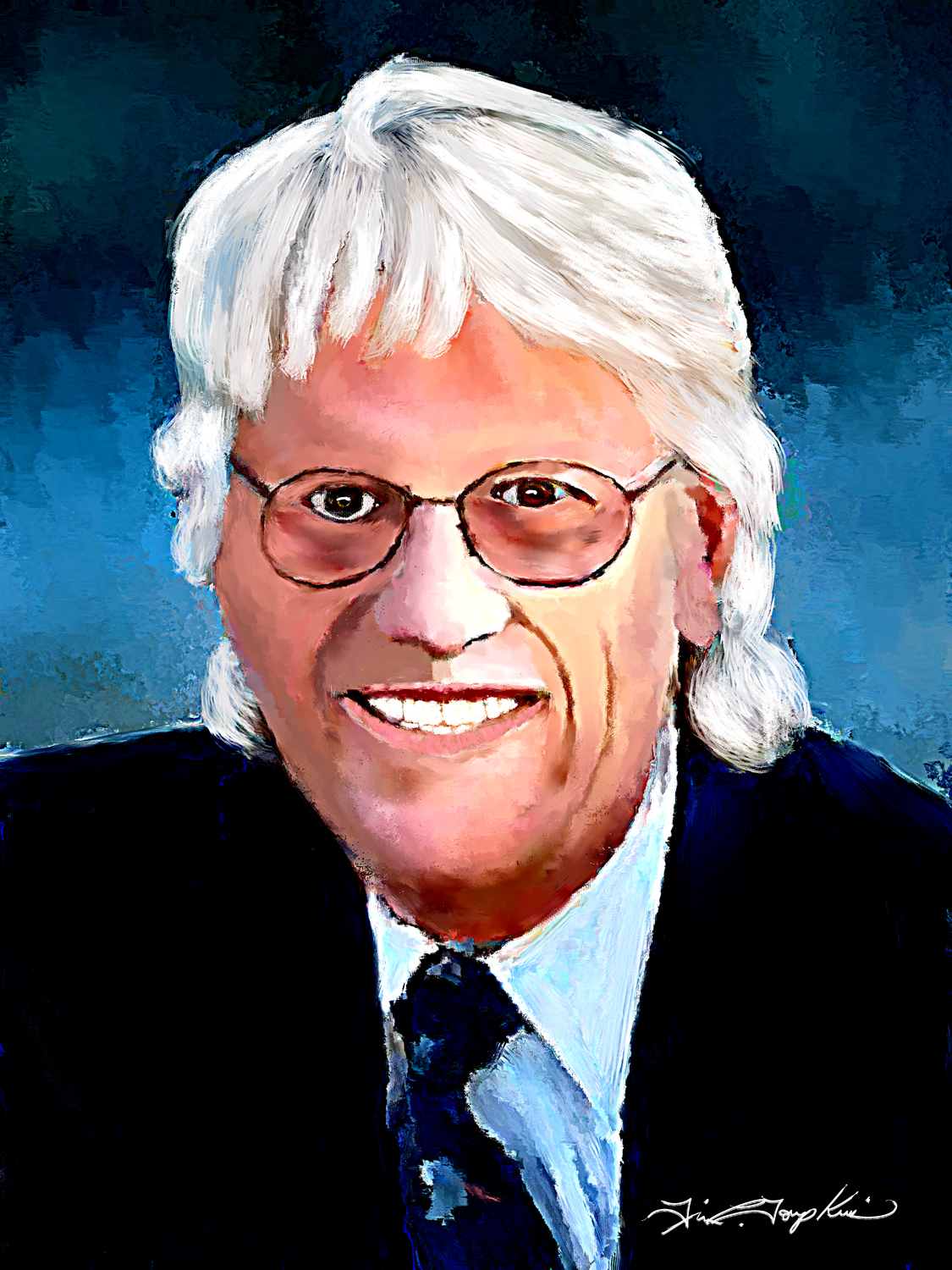
Photo: Courtesy Dr. Vernon Smith. Painting Tim Tompkins – PaintHistory.com
Vernon L. Smith BSEE, Ph.D.[Economics]
The Sveriges Riksbank Prize in Economic Sciences in Memory of Alfred Nobel 2002
Nobel co-recipient Daniel Kahneman
Electrical
Engineer, Experimental Economist. Founder, International Foundation for
Research in Experimental Economics; Founder Economic Science Institute
at Chapman University.
“… If I am ever reborn, I hope to be a madman yet again …”

Photo: Courtesy Evelyn M. Witkin
Evelyn Maisel Witkin Ph.D.
National Medal of Science – Biological Science 2002
Zoologist – Molecular Geneticist. E. coli. DNA mutagenesis and DNA
repair. Interests: Science education in public schools; Connections
between contemporary Victorians poet Robert Browning and Charles Darwin.
Essentially same grant from 1956 until retirement in 1991.
Photo: Courtesy Dr.Wolfgang Ketterle
Wolfgang Ketterle Ph.D.
The Nobel Prize in Physics 2001
Nobel co-recipients Eric A. Cornell, Carl E. Wieman
Physicist – Atomic Physics. Hobbies: Running, Bicycling.
“…the quest for pure knowledge and the pursuit of goals which are
only vaguely defined and change as the research progresses… I didn’t
anticipate that the best was still to come”.

Photo © Raimond Spekking / CC BY-SA 4.0 (via Wikimedia Commons). Painting Tim Tompkins – PaintHistory.com
Joseph E. Stiglitz
The Sveriges Riksbank Prize in Economic Sciences in Memory of Alfred Nobel 2001
Co-nobelists:George A. Akerlof, A. Michael Spence
Photo: Courtesy Dr. George F. Bass
George Fletcher Bass Ph.D.
National Medal of Science – Biological Sciences 2001
Archeologist. Father of underwater archaeology. Excavated shipwrecks of Bronze Age, Classical Age, Byzantine. Founded Institute of Nautical Archaeology.
Findings throw new light into beginning of free enterprise system,
dating Homer’s Odyssey, chronologies of Egyptian dynasties, Helladic
cultures; histories of technology, economics, music, art, religion.
“The greatest thrill comes from the library, when you can
understand something about what you’ve found, when it all comes together
and it means something.”
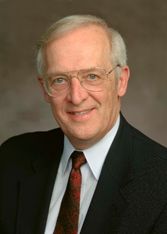
Photo: Courtesy Gene Elden Likens
Gene Likens Ph.D.
National Medal of Science – Biological Sciences 2001
Zoologist. Ecosystem ecology, biogeochemistry, acid rain, human impacts on aquatic and terrestrial ecosystems. Linked fossil fuel combustion to acid rain. Founder, Cary Institute of Ecosystem Studies

Drawing: Harry James
Jack S. Kilby Ph.D.
The Nobel Prize in Physics 2000
Co-nobelists Zhores Alferov, Herbert Kroemer

Photo: Courtesy Nancy C. Andreasen
Nancy Andreasen M.D.,Ph.D.
National Medal of Science – Biological Sciences 2000
Psychiatrist, Litterateur. Cognitive and Behavioral
Neuroscience, Genomics, Neuroimaging, Neuroscience of Creativity,
Schizophrenia. Writes books to educate laity and reduce stigma. Founding
Chair, Neuroscience Section, American Association for the Advancement
of Science (AAAS).
Creative people tend to be very persistent, even when confronted with skepticism or rejection.
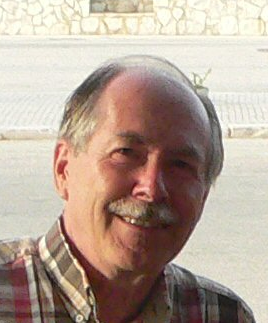
Photo: Gerardus ”t Hooft
Gerardus ‘t Hooft Ph.D.
The Nobel Prize in Physics 1999
Nobel Prize also awarded to Martinus J.G. Veltman
Theoretical Physicist – Particle Physics. For PH.D Thesis work in 1971, Nobel Prize awarded in 1999.
“A man who knows everything,” my answer at age 8 yrs,
regarding what I’d like to become when I grow up. I meant “scientist”,
someone who unravels the secrets of the fundamental Laws of Nature.
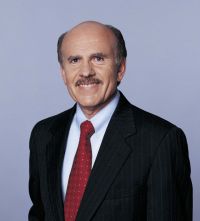
Photo: Courtesy Dr.Louis Ignarro
Louis J. Ignarro Ph.D.
The Nobel Prize in Physiology or Medicine 1998
Nobel Prize also awarded to Robert F. Furchgott and Ferid Murad
Molecular & Medical Pharmacologist
While testifying before Congress in 2000, Ignarro remarked: “Only in America could the son of an uneducated carpenter receive the Nobel Prize in Medicine.”

Photo: Dan Bahcall, Wiki
John N. Bahcall Ph.D.
National Medal of Science – Physical Sciences 1998

Photo: Wikipedia
Don L. Anderson Ph.D.
National Medal of Science – Physical Sciences 1998

Painting Tim Tompkins – PaintHistory.org
William D. Phillips Ph.D.
The Nobel Prize in Physics 1997
Nobel co-recipients Steven Chu, Claude Cohen-Tannoudji
Physicist. Development of methods to cool and trap atoms with laser
light. Think about physics intuitively. Open, lively discussion of
physics problems. Do physics at frontiers competitively with openness,
humanity, cooperation. Excellent teacher. Religious.
“No prize can compare in importance to family and friends I count as my greatest treasures”.
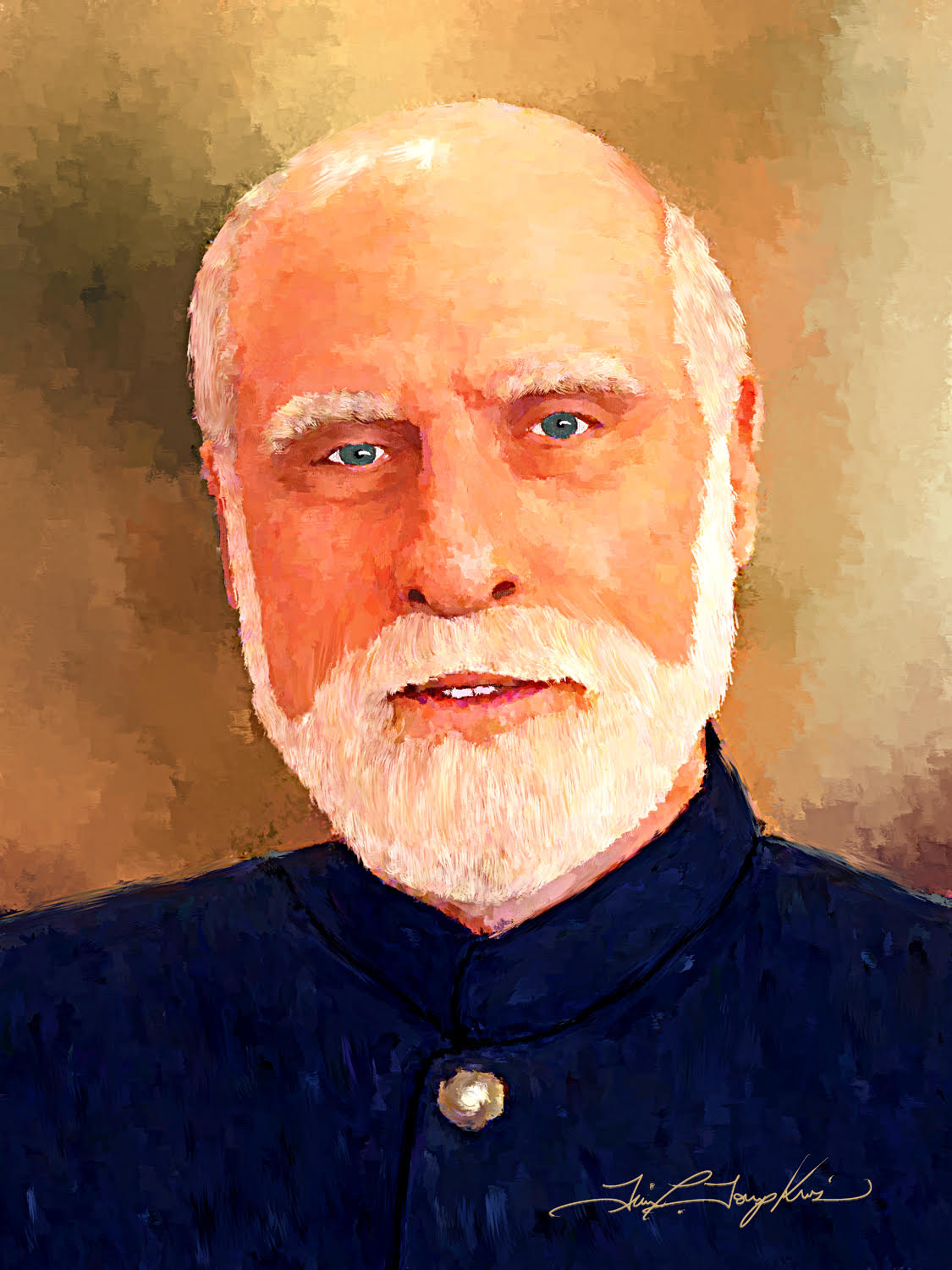
Photo Courtesy Vinton Cerf. Painting Tim Tompkins – PaintHistory.com
Vinton Cerf Ph.D.
National Medal of Technology and Innovation 1997
One of two Fathers of the Internet. TCP/IP protocols. Internet
Architecture. Chief Internet Evangelist, Google. Interplanetary Internet.
Living Legend.
“Brilliant, indescribably enthusiastic, humorous, happy, treats people
extremely well. It would be nice to go to work every day and work with
people like Vint Cerf.” – R.V. Nagaveni, Founder, Ganga Library.
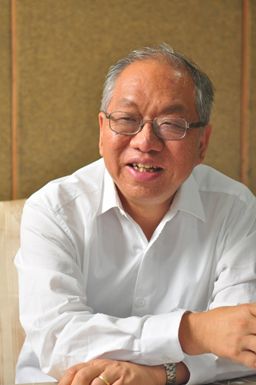
Photo: Courtesy Dr. Shing-Tung Yau
Shing-Tung Yau Ph.D.
National Medal of Science – Mathematics and Computer Science 1997
Mathematician. Differential geometry, Differential equations,
General relativity. Calabi-Yau manifolds. Miyaoka-Yau inequality.
Founder: Institute of Mathematical Sciences, Chinese University of Hong
Kong; Morningside Center of Mathematics at Academia Sinica; Center of
Mathematical Sciences at Zhejiang University; Tsinghua Mathematical
Sciences Center, China. Adviser more than 50 doctoral students.
Family fled mainland China and Communist takeover when he was an infant. Leader of street gang and often skipped school.
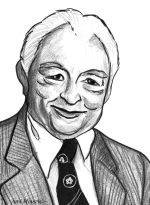
Drawing: Ami Mowris
William S. Vickrey Ph.D.
The Sveriges Riksbank Prize in Economic Sciences in Memory of Alfred Nobel 1996
Co-nobelist: James A. Mirrlees
Economist, Mathematician. ‘Fundamental contributions to economic
theory of incentives under asymmetric information.’ Solve real world
problems. Interests: efficiency of public services, irrational budget
accounting, excessive concern with inflation, insufficient attention to
wasteful unemployment, macroeconomic stabilization, ethics, philosophy,
world peace.
Rip van Winkle award for deep, uninterrupted concentration while attending seminars.

Photo: US Govt/Wikipedia
Frederick Reines B.S. (Mechanical Engineering), Ph.D. (Physics)
The Nobel Prize in Physics 1995
National Medal of Science – Physical Sciences 1983
Nobel co-recipient Martin L. Perl

Drawing: Ami Mowris
John C. Harsanyi Ph.D.
The Sveriges Riksbank Prize in Economic Sciences in Memory of Alfred Nobel 1994
Co-Nobelists: John F. Nash Jr., Reinhard Selten
Economist. Contributed to developing game theory. Hungarian-American.

Drawing: Harry James
Clifford G. Shull Ph.D.
The Nobel Prize in Physics 1994
Co-nobelist Bertram N. Brockhouse

Photo: Michael Fogel/Wikipedia
Robert W. Fogel
The Sveriges Riksbank Prize in Economic Sciences in Memory of Alfred Nobel 1993
Co-nobelists: Douglass C. North

Photo: Mike80 Wiki, Painting Tim Tompkins – PaintHistory.com
Gary Becker
The Sveriges Riksbank Prize in Economic Sciences in Memory of Alfred Nobel 1992

Gordimer at the Göteborg Book Fair, 2010. Photo: Bengt Oberger.
Nadine Gordimer
The Nobel Prize in Literature 1991
Writer, illustrated consequences of apartheid. For fifty years the ‘Geiger Counter of Apartheid.
“My answer is: Recognize yourself in others”.” A child understands
fear, and the hurt and hate it brings”. “Time is change; we measure its
passing by how much things alter”.
Photo: Yosemite Climbing Assoc/Wikipedia
Henry W. Kendall Ph.D.
The Nobel Prize in Physics 1990
Co-nobelist Jerome I. Friedman, Richard E. Taylor
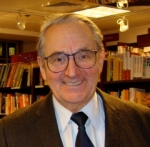
Photo: Elias .J. Corey at Harvard. Creator: Trvthchem personal photo. 19 Nov 2007. Source: Wikimedia Commons.
Elias James Corey Ph.D.
The Nobel Prize in Chemistry 1990
Organic Chemist – Interested in application of organic
chemistry to human health. His groups have achieved a multitude of total
syntheses of complex molecules. Originator of retrosynthetic analysis.
Recognized as “Most Cited Author in Chemistry” by American Chemical
Society in 2002.
“Organic chemistry was especially fascinating with its intrinsic beauty and its great relevance to human health.”

Photo: Innovation & Business Architectures, Inc./Wikipedia
Harry M. Markowitz
The Sveriges Riksbank Prize in Economic Sciences in Memory of Alfred Nobel 1990
Co-nobelists: Merton H. Miller, William F. Sharpe

Photo: Larry D. Moore/Wikipedia
William F. Sharpe
The Sveriges Riksbank Prize in Economic Sciences in Memory of Alfred Nobel 1990
Co-nobelists: Harry M. Markowitz, Merton H. Miller

Photo: Wikipedia
Merton H. Miller
The Sveriges Riksbank Prize in Economic Sciences in Memory of Alfred Nobel 1990
Co-nobelists: Harry M. Markowitz, William F. Sharpe

Photo: NIH
Harold Varmus M.D.
Nobel Prize in Physiology or Medicine 1989
Nobel Prize shared by J. Michael Bishop
National Medal of Science – Biological Sciences 2001
Physician, Scientist, Litterateur. Cellular origin of retroviral oncogenes. Co-founder, Public Library of Science Journals. Initiated doubling NIH budget. Interests: cycling, rowing.
‘Unflappable Varmus’

Photo: Christopher Michel. Painting: Tim Tompkins PaintHistory.com
The 14th Dalai Lama
The Nobel Peace Prize 1989
Religious and Political Leader of Tibet
Head of nonviolent opposition to China’s occupation of Tibet.
“Human happiness and human satisfaction must ultimately come from within oneself.”

Photo: Wikipedia Commons
Trygve Haavelmo
The Sveriges Riksbank Prize in Economic Sciences in Memory of Alfred Nobel 1989

Photo: Sigismund von Dobschütz. Source: Wikimedia Commons
Jack Steinberger Ph.D.
Nobel Prize in Physics 1988
National Medal of Science – Physical Sciences 1988 USA
Nobel Prize shared with Leon M. Lederman, Melvin Schwartz
Physicist, Cosmologist, Astrophysicist. Hobbies: Playing the Flute, Tennis, Mountaineering, Sailing.
To Ganga Library founder on 3 Aug 2014, “I have used your questions to me as an incentive to prepare a list of my publications”.

Drawing: Harry James
Melvin Schwartz Ph.D.
The Nobel Prize in Physics 1988
Co-Nobelist: Leon M. Lederman, Jack Steinberger
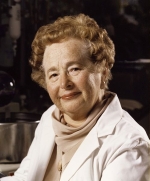
Photo: Wikimedia Commons
Gertrude B. Elion M.S.[Chemisty]
The Nobel Prize in Physiology or Medicine 1988
National Medal of Science – Chemistry 1991
Chemist, Pharmacologist. Discovered principles for drug treatment;
developed drugs – anticancer, immunosuppressive, antiviral,
antibacterial, anti-gout, anti-malarial. Purines.
“I was a child with an insatiable thirst for knowledge. My beloved
grandfather died of cancer when I was 15. I was highly motivated to
discover a cure for this terrible disease”.

Photo: Wikipedia
William O. Baker Ph.D.
National Medal of Science – Chemistry 1988
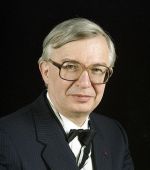
Photo: Jean-Marie Lehn after a lecture at ETH Zurich, 2012, Wikimedia Commons
Jean-Marie Lehn Ph.D.
The Nobel Prize in Chemistry 1987
Nobel co-recepients Donald J. Cram, Charles J. Pedersen
Chemist. Interests: Supramolecular chemistry, Self-assembly and
self-organization, Constitutional dynamic chemistry; Music, Philosophy.
Founding director, ‘Chemistry, a European Journal’. Gave starting
impetus to other European journals, rare manifestation of European
spirit and supranationality bridging historical divides!
President, International Organization for Chemical Sciences in Development, helping chemists in developing countries.
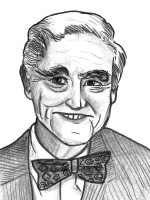
Drawing by Ami Mowris
Donald J. Cram Ph.D.
The Nobel Prize in Chemistry 1987
Co-Nobelists: Jean-Marie Lehn, Charles J. Pedersen
The President’s National Medal of Science – Chemistry 1993
Organic Chemist. Development, use of molecules with
structure-specific interactions of high selectivity. Taught himself
solid geometry from book, winning scholarship. High emotional
intelligence.
When word “research” entered my vocabulary, it had magic ring,
suggesting search for new phenomena. Chemical research became my god,
and conducting it, my act of prayer.
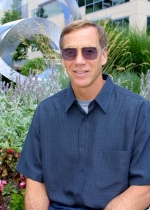
Photo: Courtesy Michael H. Freedman
Michael H. Freedman Ph.D.
National Medal of Science – Mathematics and Computer Science 1987
American mathematician. Proof of Poincare Conjecture in dimension four. One of the greatest achievements in mathematics in this century. Fields Medal, 1986.

Photo: Atlas Network/Wikipedia
James M. Buchanan Jr.
The Sveriges Riksbank Prize in Economic Sciences in Memory of Alfred Nobel 1986 ,

Photo: Umofomia Wiki Painting Tim Tompkins PaintHistory,com
Franco Modigliani
The Sveriges Riksbank Prize in Economic Sciences in Memory of Alfred Nobel 1985

Photo: Dann Kristoff. Painting: Tim Tompkins PaintHistory,com
Robert Merrifield Ph.D.
The Nobel Prize in Chemistry 1984

Drawing: Harry James
Subramanyan Chandrasekhar Ph.D.
The Nobel Prize in Physics 1983
Co-Nobelist: William A. Fowler

Painting: Tom Tompkins PaintHistory.com
Barbara McClintock Ph.D.
The Nobel Prize in Physiology or Medicine 1983
The President’s National Medal of Science – Biological Sciences 1970
Cytogeneticist. Mobile genetic elements, 1948. Nobel after 35
years. Skilled experimentalist, master cytological detail interpreter,
brilliant theoretician. Solo labor, no technical help. Friendly fellow
scientists. Discriminated as woman.
“Tacit assumptions – substance of dogma – served as barrier to
effective communication. My understanding of phenomenon was too radical
for time.”

Photo: Konrad Jacobs, Erlangen, © MFO. Painting Tim Tompkins – PaintHistory.com
Gerard Debreu
The Sveriges Riksbank Prize in Economic Sciences in Memory of Alfred Nobel 1983

Photo Nasoline. Painting Tim Tompkins – PaintHistory.com
George J. Stigler Ph.D., M.B.A.
The Sveriges Riksbank Prize in Economic Sciences in Memory of Alfred Nobel 1982
The President’s National Medal of Science – Behavior and Social Science 1987
Economist – industrial organization. ‘Seminal studies of industrial
structures; functioning of markets; causes, effects of public
regulation.’ Great teacher. Writings easy to admire, joy to read,
impossible to imitate. Interest: many areas of economics; history of
economics. Very Humorous.
Chicago Economics Department intellectual ferment – intense intellectual atmosphere; captivated him.
Photo: Wiki
Seymour Benzer Ph.D.[Physics]
National Medal of Science – Biological Sciences 1982
Physicist, molecular biologist, behavioral biologist (neurogeneticist). Post Pearl Harbor worked in secret wartime project studying semiconducting properties of germanium, work that foreshadowed development of transistor. Functional gene is a linear stretch of DNA with definable boundaries. Stretches of DNA are all linked to each other as adjacent pieces of chromosome.

Photo: Courtesy Dr.Roald Hoffmann
Roald Hoffmann Ph.D.
The Nobel Prize in Chemistry 1981
Nobel Prize also awarded to Kenichi Fukui
National Medal of Science – Chemistry 1983 USA
Chemist, Poet, Philosopher, Writer, Chemistry Teacher Text/Television.
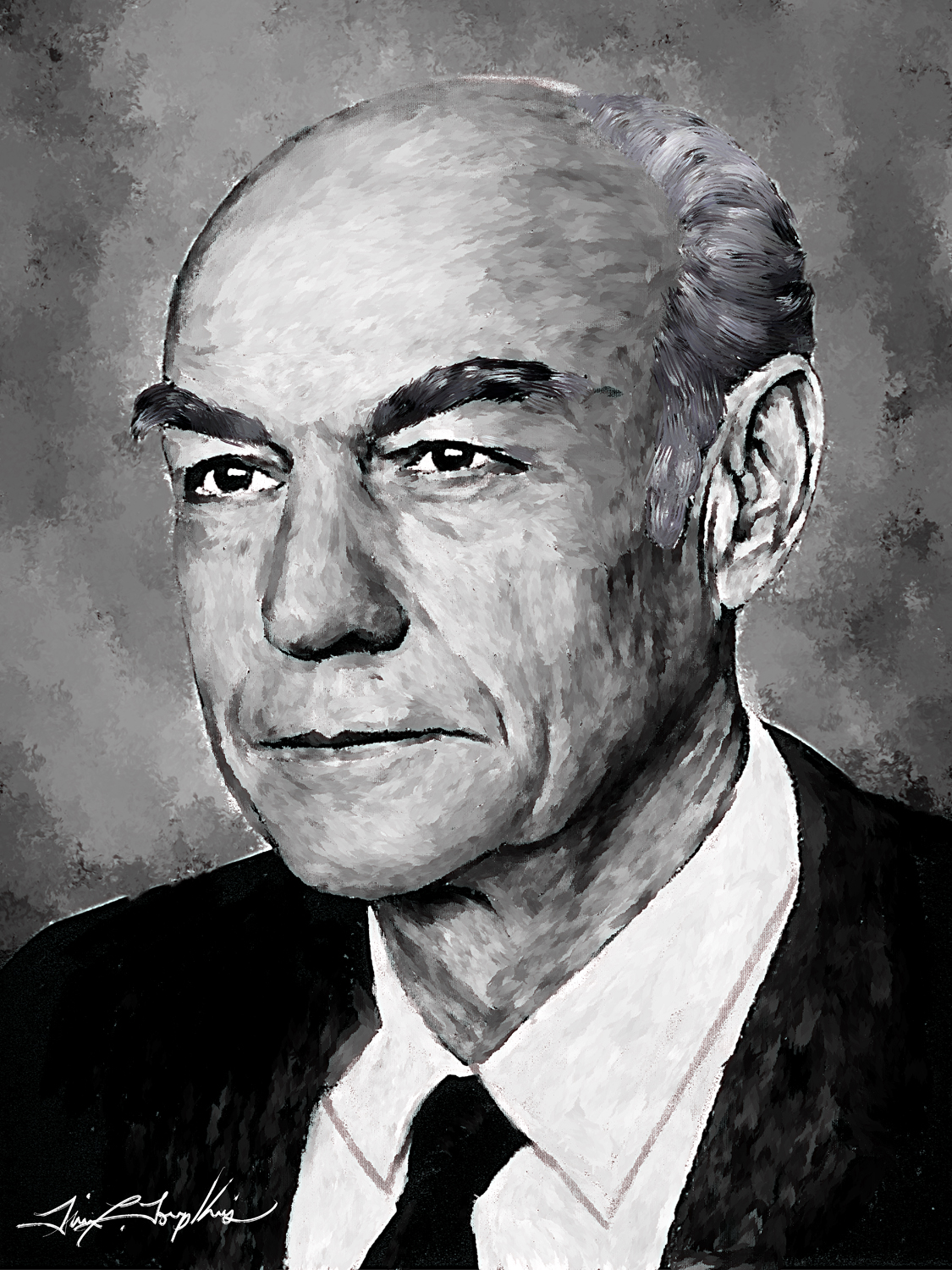
Painting: Tim Tompkins PaintHistory.com
Roger Wolcott Sperry Ph.D. [Zoology], M.A. [Psychology]
The Nobel Prize in Physiology or Medicine 1981
Nobel co-recipients David H. Hubel, Torsten N. Wiesel
The President’s National Medal of Science – Biological Sciences 1989
Psychologist, Philosopher, Zoologist, Neuroanatomist.
Functional specialization of cerebral hemispheres. Split-brain studies.
Duality of consciousness. Mind and consciousness. High ethical
standards. Authorship generosity.
Ralph Gerard, “I know of nobody else who has disposed of cherished
ideas of his doctoral and postdoctoral sponsors, at that time the
acknowledged leaders in their fields.”

Photo: Wikipedia
James Tobin
The Sveriges Riksbank Prize in Economic Sciences in Memory of Alfred Nobel 1981

Photo: NLM, Wiki
Baruj M. Benacerraf M.D.
The Nobel Prize in Physiology or Medicine 1980
Nobel co-recipients: Jean Dausset George D. Snell

Photo: Nobelprize.org Painting Tim Tompkins PaintHistory.com
George Davis Snell D.Sc.
The Nobel Prize in Physiology or Medicine 1980
Nobel co-recipients: Baruj Benacerraf, Jean Dausset
Geneticist, Transplantation Immunologist. Genetically determined
structures on cell surface that regulate immunological reactions, the
major histocompatibility complex, HLA. Thesis work on linkage in mice
largely determined future work. Interest: social evolution.
“In examining histocompatibility genetics as one of several
potential new undertakings, I thought I saw possibilities for new
openings.”

Photo Purdue University. Painting Tim Tompkins PaintHistory.com
Herbert C Brown Ph.D.
The Nobel Prize in Chemistry 1979
The President’s National Medel of Sciences – Physical Sciences, 1969
Nobel co-recipient Georg Wittig
Organic Chemist. Development of use of boron into important
reagents in organic synthesis. School, advanced several times,
graduating at 12; refused further advancement, avoiding being sister’s
classmate.
Graduating, Depression years, future wife Sarah gave him gift, Stock’s ‘Hydrides of Boron and Silicon’ because cheapest chemistry book! Led to Nobel Prize!

Drawing: Newton Llorente
Georg Wittig Ph.D.
The Nobel Prize in Chemistry 1979
Nobel co-recipient Herbert C. Brown
Organic
Chemist. Development of use of phosphorus into important reagents in
organic synthesis. Wittig reaction. Mentored 300 graduate students,
post-docs; provided close supervision for crucial experiments.
“Chemical research and mountaineering similar. To reach
goal/summit, initiative, perseverance required. After hard work, great
joy to be at goal/peak with its splendid panorama…”

Photo Wiki. Painting Tim Tompkins – PaintHistory.com
Theodore W. Schultz Ph.D.
The Sveriges Riksbank Prize in Economic Sciences in Memory of Alfred Nobel 1979
Co-Nobelist: Sir Arthur Lewis
Agricultural economist. Pioneered ‘human capital’ research. Population
quality, knowledge matter. Concern for poor. Keen observer of world in
which he lived. Very Humorous.
“Mankind’s future is not foreordained by space, energy, cropland.
Will be determined by intelligent evolution of humanity. Agree with
Margaret Mead: “Future of mankind is open ended.””

Drawing: Richard Rappaport/Wikipedia
Herbert Simon
The Sveriges Riksbank Prize in Economic Sciences in Memory of Alfred Nobel 1978
National Medal of Science – Behavioral and Social Science, 1986

Painting Tim Tompkins PaintHistory.com
Daniel M. Nathans M.D.
The Nobel Prize in Physiology or Medicine 1978
Nobel co-recipients Werner Arber, Hamilton O. Smith
National Medal of Science – Biological Sciences 1993
Physician,
Molecular Biologist – Genetics. Restriction enzymes and their
application to molecular genetics. Groundwork for human genome project,
drug insulin. Able administrator – high signal-to-noise ratio.
“Valuable internship year in medicine with masterful clinician
Robert Loeb; The glimpses of human strength and frailty that a physician
sees are still with me.”

Photo: Courtesy Dr. Roger Guillemin
Roger Guillemin M.D., Ph.D.
The Nobel Prize in Physiology or Medicine 1977
Nobel Prize also awarded to Andrew V. Schally, Rosalyn Yalow
National Medal of Science-Biological Sciences 1976 USA
Physician, Physiologist, Neuroendocrinologist. Peptide hormone production of brain. Visual Artist.
Alfred Nobel
chose to associate Literature and Science in his legacy. The mission,
role and responsibility to society of a scientist and an artist are the
same.

Photo: Dutch Nat’l Archives/Wikipedia
John H. van Vleck Ph.D.
The Nobel Prize in Physics 1977
The President’s National Medal of Science – Physical Sciences 1966
Nobel co-recipients Philip W. Anderson, Sir Nevill F. Mott

Photo: Wikipedia Painting Tim Tompkins – PaintHistory.com
Bertil Ohlin
The Sveriges Riksbank Prize in Economic Sciences in Memory of Alfred Nobel 1977
Co-nobelist: James E. Meade

Photo: LSE Library, Wiki. Painting Tim Tompkins – PaintHistory.com
James E. Meade
The Sveriges Riksbank Prize in Economic Sciences in Memory of Alfred Nobel 1977
Co-nobelist: Bertil Ohlin

Photo: Public Domain, Wikipedia
James Rainwater Ph.D.
The Nobel Prize in Physics 1975
Co-Nobelists: Aage N. Bohr, Ben R. Mottelson

Photo: Public Domain, Wikipedia
Howard M. Temin Ph.D.
The Nobel Prize in Physiology or Medicine 1975
Nobel Co-recipients David Baltimore, Renato Dulbecco
National Medal of Science – Biological Sciences 1992
Virologist. Interaction between tumor viruses and genetic material
of cell. DNA provirus and RNA-directed DNA synthesis. Reverse
Transcriptase. Intellectually courageous. Civic minded.
How fortunate to live in a country at a time and in a social class
that has enabled us to realize our potential. Not been possible for
many.

Photo Cowles Yale. Painting Tim Tompkins – PaintHistory.com
Tjalling C. Koopmans Ph.D.
The Sveriges Riksbank Prize in Economic Sciences in Memory of Alfred Nobel 1975
Co-Nobelists Leonid Vitaliyevich Kantorovich
Mathematician, Theoretical Physicist and Economist. Prize for
theory of optimal allocation of resources. Other interest: econometrics
and statistics. Hobby: writing music.
Described collaborator and friend Jacob Marschak as being able to discern both pretense and timidity!

Photo: Nobelprize.org Painting: Tim Tompkins PaintHistory.com
Paul J. Flory Ph.D.
The Nobel Prize in Chemistry 1974
National Medal of Sciences – Physical Sciences 1974

Photo: Dick Clark Mises at English Wikipedia
Friedrich von Hayek
The Sveriges Riksbank Prize in Economic Sciences in Memory of Alfred Nobel 1974
Co-nobelist: Gunnar Myrdal

Photo: Wikipedia
Gunnar Myrdal
The Sveriges Riksbank Prize in Economic Sciences in Memory of Alfred Nobel 1974
Co-nobelist: Friedrich von Hayek

Photo: Keystone/Wikipedia
Wassily Leontief
The Sveriges Riksbank Prize in Economic Sciences in Memory of Alfred Nobel 1973

Daniel I. Arnon Ph.D.
National Medal of Science Science – Biological Sciences 1973
Plant Physiologist. Photosynthesis, nitrogen fixation. Child
prodigy. Post-Sputnik national committee. Wrote four chapters on
evolution of life processes in “Blue Series”
high-school biology textbook, widely translated, nationally acclaimed.
Budgeted well time and circumstances. Debater, played devil’s advocate
with zest.
Reminded those weary of duplicating, “Repetition is the mother of learning.”

Drawing: Newton Llorente
Stanford Moore Ph.D.
The Nobel Prize in Chemistry 1972
Co-nobelist Christian Anfinsen, William H. Stein

Painting Tim Tompkins – PaintHistory.com
William H. Stein Ph.D.
The Nobel Prize in Chemistry 1972
Co-Nobelists Christian Anfinsen, Stanford Moore

Painting Tim Tompkins PaintHistory.com
John R. Hicks
The Sveriges Riksbank Prize in Economic Sciences in Memory of Alfred Nobel 1972
Co-nobelists: Kenneth J. Arrow.

Photo: Linda A. Cicero/Stanford News Service/Wikipedia
Kenneth J. Arrow
The Sveriges Riksbank Prize in Economic
Sciences in Memory of Alfred Nobel 1972, National Medal of Science –
Behavioral and Social Science 2004
Co-nobelists: John R. Hicks
Drawing: Ami Mowris
Simon S. Kuznets Ph.D.
The Sveriges Riksbank Prize in Economic Sciences in Memory of Alfred Nobel 1971
Economist and Statistician. Interpreted economic growth in a manner which helped better understand economic and social structure.

Photo: NIH
Julius Axelrod Ph.D.
The Nobel Prize in Physiology or Medicine 1970
Co-Nobelists Sir Bernard Katz, Ulf von Euler
Pharmacologist. Neurophysiologist. Mechanism for storage, release,
inactivation of humoral transmitters in nerve endings. Discovered drug
metabolic pathways: hydroxylation, demethylation, deamination,
conjugation. Led to liver’s microsomal drug-metabolizing enzymes
discovery. Pheochromocytoma. Carboxylmethyl transferase. Melatonin.
Ideal mentor. Infectious exhilaration in discovery. Research was genuine fun. Students came out of lab with same attitude.

Photo: Innovation & Business Architectures, Inc./Wikipedia
Paul A. Samuelson
The Sveriges Riksbank Prize in Economic Sciences in Memory of Alfred Nobel 1970

Photo: Dutch National Archives/Wikipedia
Jan Tinbergen
The Sveriges Riksbank Prize in Economic Sciences in Memory of Alfred Nobel 1969
Co-nobelist Ragnar Frisch

Image: Wikipedia
Alfred Day Hershey Ph.D.
The Nobel Prize in Physiology or Medicine 1969
Co-Nobilists Max Delbrück, Salvador E. Luria
Geneticist, Virologist. Viruses’ replication mechanism, genetic
structure. “Nothing more satisfying than developing method; ideas come
and go, methods last.” Superb editor. Remembered: chemical basis of
heredity.
Nobel Awards bring happiness not only to recipients, colleagues,
friends, but to strangers! Humans love ceremonies that honor truth,
justice. Thank God for sentiment.

Photo: Jonathan Delbruck/Wikipedia
Max Delbrück M.D.
The Nobel Prize in Physiology or Medicine 1969
Co-Nobelists Alfred D. Hershey, Salvador E. Luria

Drawing: Newton Llorente
Lars Onsager Ph.D.
The Nobel Prize in Chemistry 1968
National Medal of Science – Physical Sciences 1968

Photo: Wikipedia
Paul D. Bartlett Ph.D.
National Medal of Science – Physical Sciences 1968

Photo: Jose Mercado/Stanford News Service/Wikipedia
Luis Alvarez Ph.D.
The Nobel Prize in Physics 1968
Painting Tim Tompkins – PaintHistory.com
Haldan K. Hartline M.D.
The Nobel Prize in Physiology or Medicine 1967
Nobel co-recipients Ragnar Granit, George Wald
Physician, Biophysicist. Physiological and chemical visual processes in eye.
“Vision itself is a dynamic process. There is little in the world
that stands still, at least not as imaged in our retinas, for our eyes
are always moving. The visual system is almost exclusively organized to
detect change and motion.”

Wiki. Painting Tim Tompkins – PaintHistory.com
George Wald Ph.D.
The Nobel Prize in Physiology or Medicine 1967
Co-Nobalists Ragnar Granit, Keffer Hartline
Zoologist. Visual physiologist. Visual pigment molecules are
protein bound to derivative of vitamin A. Excellent teacher. Political
actions part of biologist: one who is concerned with life.
“Selig Hecht was great teacher, physiologist. After leaving his
laboratory, I felt his presence. What I did, said, wrote, was addressed
to him.”

Photo: Public Domain/Wikipedia
Hans Bethe Ph.D.
The Nobel Prize in Physics 1967

Painting Tim Tompkins – PaintHistory.com
Peyton Rous M.D.
The Nobel Prize in Physiology or Medicine 1966
Co-Nobelist Charles B. Huggins
Physician, Pathologist, Scientist. Tumor-inducing Rous Sarcoma
Virus, tumor filtrate transplantability. Nobel 50 yrs after discovery.
Blood transfusion, world’s first blood bank, Rous-Turner solution.
Accurate editing, content, style. Experiments: extreme clarity.
Equanimity, warmth. Many old are young to life.
“Uneducated men can be as great-hearted, lovable as those who know much.”

Drawing: Newton Llorente
Robert S. Mulliken Ph.D.
The Nobel Prize in Chemistry 1966

Photo Wikipedia Painting Tim Tompkins – PaintHistory.com
Robert B. Woodward Ph.D.
The Nobel Prize in Chemistry 1965
National Medal of Science – Physical Sciences 1964

Photo: public domain/Wikipedia
Julian Schwinger Ph.D.
The Nobel Prize in Physics 1965
National Medal of Science – Physical Sciences 1964
Nobel co-recipients Sin-Itiro Tomonaga, Richard P. Feynman

Photo: Wikipedia
Roger Adams Ph.D.
National Medal of Science – Chemistry 1964

Photo Public domain:Wiki. Painting Tim Tompkins – PaintHistory.com
Maria G. Mayer Ph.D.
The Nobel Prize in Physics 1963
Co-Nobelists: Eugene Wigner, J. Hans D. Jensen

Photo: public domain/Wikipedia
Eugene Wigner Ph.D.
The Nobel Prize in Physics 1963
The President’s National Medal of Science – Physical Sciences 1968
Nobel co-recipients Maria Goeppert Mayer, J. Hans D. Jensen

Painting Tim Timpkins – PaintHistory.com
Robert Hofstadter Ph.D.
The Nobel Prize in Physics, 1961
Nobel co-recipient Rudolf Mössbauer
National Medal of Science – Physical Science 1986
Nuclear and particle physicist. Discoverer of sodium iodide scintillation counters. Carried out electron scattering from atomic nuclei, revealing structure of nuclei and nucleons. Original proposer of two-mile SLAC linear accelerator. Pioneer of gamma-ray astronomy, using EGRET detector aboard the Compton observatory. Research in laser fusion, applications of physics to medicine.

Painting Tim Tompkins PaintHistory.com
Georg von Békésy Ph.D. [Physics]
The Nobel Prize in Physiology or Medicine 1961
Physicist, Communication engineer. Psychophysiology of hearing.
Physical mechanism of stimulation within cochlea, a frequency analyzer.
Accidental selection of science field. Technically skillful, elegant
experimental design. He nuisance to autopsy room, mechanical workshops.
“Found inner ear beautiful under stereoscopic microscope. It was pleasure of beauty that made me stick to ear.”

Photo NIH. Painting Tim Tompkins – PaintHistory.com
Arthur Kornberg M.D.
The Nobel Prize in Physiology or Medicine 1959
Nobel co-recipient Servero Ochoa
National Medal of Science – Biological Sciences 1979
Physician, Scientist. Discovered mechanisms in biological synthesis
of RNA and DNA – basis of discovery of recombinant DNA which helped
ignite biotechnology revolution. Founder, DNAX Institute.
“With more scientists struggling for grants in an era of tight
budgets, nobody is going to propose doing anything that is bold or
creative.”

Photo: Public Domain/Wikipedia
Owen Chamberlain Ph.D.
The Nobel Prize in Physics 1959
Co-Nobelist: Emilio Segrè

Photo NIH. Painting Tim Tompkins – PaintHistory.com
Joshua Lederberg Ph.D.
The Nobel Prize in Physiology or Medicine 1958
Nobel co-recipients George Beadle, Edward Tatum
National Medal of Science – Biological Sciences 1989
Geneticist. Genetic recombination and organization of genetic
material of bacteria. Artificial intelligence. NASA seeking life on
Mars. Fastest rate possible for growth of bacterial cell and why. Nobel
Prize at age 33.
At Nobel Banquet, “Pride is humbled as humility is exalted in the dignity and splendor of this occasion.”

Photo Wiki, Painting Tim Tompkins – PaintHistory.com
George Wells Beadle Ph.D.
The Nobel Prize in Physiology or Medicine 1958
Co-Nobelists Edward Tatum, Joshua Lederberg
Biochemical Geneticist. Discovered that genes act by regulating
definite chemical events. Brought era of classical genetics to a close
and launched molecular age.
“It was a time when one went to work in the morning wondering what new excitement the day would bring.” – Colleague and biographer Norman H. Horowitz.

Painting Tim Tompkins PaintHistory.com
Edward L. Tatum Ph.D.
The Nobel Prize in Physiology or Medicine 1958
Co-Nobelists George Beadle, Joshua Lederberg
Geneticist, Microbiologist, Biochemist. Genes act by regulating
definite chemical events. Changed from Drosophila to Neurospora.
Nurtured younger scientists. Generous spirit, scientific vision.
“Ability to balance critical scientific objectivity, personal
ambition, interdependence on others-some scientists take lifetime to
learn-was ingrained in Tatum from beginning.” – Mentee, Biographer Joshua Lederberg.

Photo Wiki. Painting Tim Tompkins PaintHistory.com
Dickinson W. Richards Ph.D.
The Nobel Prize in Physiology or Medicine 1956
Co-Nobelists André F. Cournand, Werner Forssmann
Physician, gentle clinician, cardiovascular physiologist.
“Discoveries concerning heart catheterization, pathological changes in
circulatory system.” Diagnosing congenital heart diseases; chronic
cardiac, pulmonary diseases; traumatic shock.
“Man’s potentiality, or these days his survival, will depend on his
conscience, more specifically, ability of leaders and followers to
change character, into more merciful beings.”

Photo: Public Domain/Wikipedia
John Bardeen Ph.D.
The Nobel Prize in Physics 1956
Co-Nobelists: William B. Shockley, Walter H. Brattain

Photo: Public Domain/Wikipedia
Walter Brattain Ph.D.
The Nobel Prize in Physics 1956
Co-Nobelists: William B. Shockley, John Bardeen

Chuck Painter / Stanford News Service
William B. Shockley Ph.D.
The Nobel Prize in Physics 1956
Nobel co-recipients John Bardeen, Walter H. Brattain

Photo Wiki. Painting Tim Tompkins – PaintHistory.com
André F. Cournand M.D.
The Nobel Prize in Physiology or Medicine 1956
Co-nobelists Werner Forssmann, Dickinson W. Richards
Physician. Discovered heart catheterization. Used contrast material
to show in X-rays. Studied pulmonary circulation – flow, pressure and
volume.
“…happiness stems from the appreciation of a task, from what is asked
of man and not from the satisfaction of his material appetites.”

Painting Tim Tompkins PaintHistory.com
Vincent du Vigneaud Ph.D.
The Nobel Prize in Chemistry 1955

Photo Wiki. Painting Tim Tompkins PaintHistory.com
Polykarp Kusch Ph.D.
The Nobel Prize in Physics 1955
Co-Nobelist: Willis E. Lamb

Photo Wiki. Painting Tim Tompkins – PaintHistory.com
Willis E. Lamb Ph.D.
The Nobel Prize in Physics 1955
Co-Nobelist: Polykarp Kusch

Photo Library of Congress, Wiki. Painting Tim Tompkins PaintHistory.com
Linus Pauling Ph.D.
The Nobel Prize in Chemistry 1954
The Nobel Peace Prize 1962
National Medal of Sciences – Physical Sciences 1974
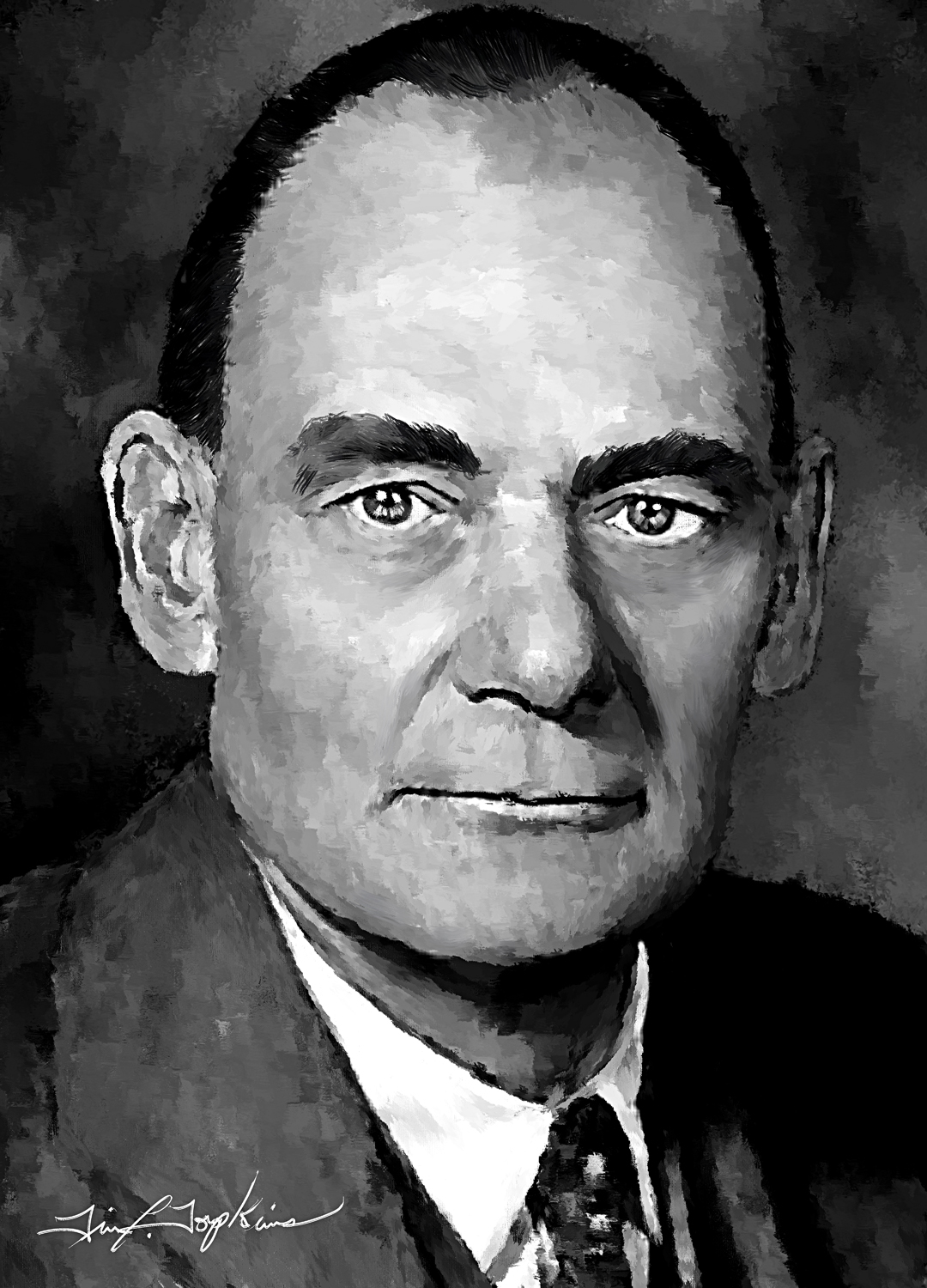
Photo Wiki. Painting Tim Tompkins – PaintHistory.com
John Franklin Enders Ph.D.
The Nobel Prize in Physiology or Medicine 1954
Co-Nobelists Thomas H. Weller, Frederick C. Robbins
Virologist, Bacteriologist. Discovered ability of poliomyelitis
viruses to grow in tissue culture. Cytopathic effect. Interferon, Viral
Oncogenesis. Tissue culture enabled identifying hundreds of viruses,
vaccine development.
Memorial to Advisor Zinsser: animated spontaneous conversation –
literature, politics. Voltaire seemed around corner; Laurence Sterne
upon the stair. Laboratory became way of life.

Photo Wikipedia. Painting Tim Tompkins PaintHistory.co
Thomas H. Weller M.D., M.S.
The Nobel Prize in Physiology or Medicine 1954
Co- Nobelists John F. Enders, Frederick C. Robbins
Physician, Virologist, Parasitologist. Discovered ability of
poliomyelitis viruses to grow in tissue culture. Isolated many viruses,
parasites; developed diagnostic tests. Isolated German measles in son.
Tissue culture enabled identifying hundreds of viruses, vaccine
development.
Nobel Committee Sven Gard: tissue cultures will do for virology what Koch accomplished by culture media.
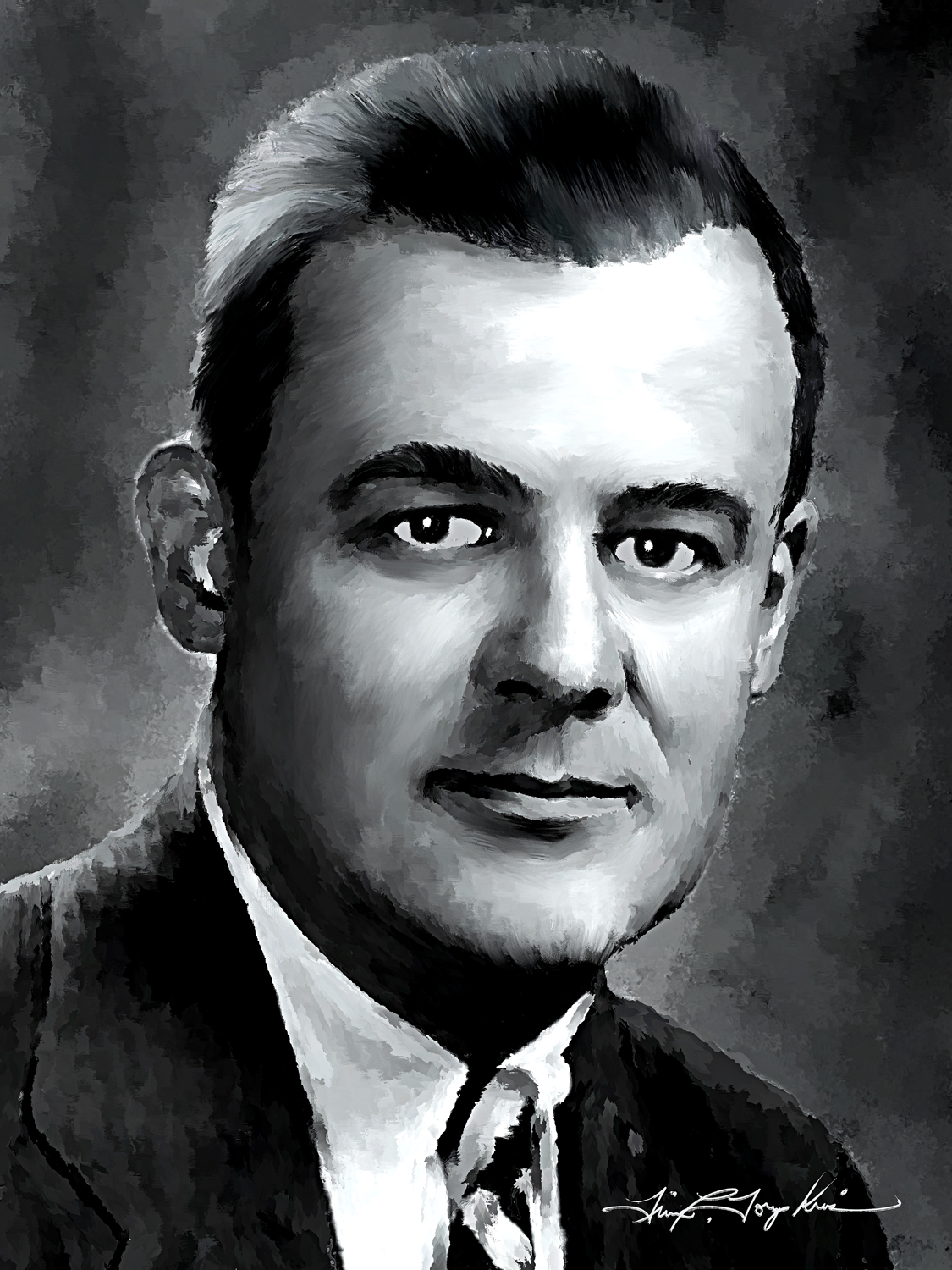
Photo Wikipedia. Painting Tim Tompkins PaintHistory.com
Frederick C. Robbins M.D.
The Nobel Prize in Physiology or Medicine 1954
Co-Nobelists John F. Enders, Thomas H. Weller
Physician, Virologist. Discovered ability of poliomyelitis viruses to grow in tissue culture. Investigated infectious hepatitis, typhus fever, Q fever, mumps, herpes simplex and vaccinia. Supervised diagnostic virus laboratory. Educator, Science Statesperson. Interest: International health. Tissue culture enabled identifying hundreds of viruses, vaccine development.

Painting Tim Tompkins – PaintHistory.org
Fritz A. Lipmann M.D.,Ph.D.
The Nobel Prize in Physiology or Medicine 1953
Co-Nobelist Hans Krebs
National Medal of Science – Biological Sciences 1966
Physician, Biochemist. Discovered co-enzyme A, its importance for
intermediary metabolism. Identified serine phosphate as constituent of
phosphoproteins which contain phosphate. CMP represents metabolically
active carbamyl donor.
Liljestrand, Science Academy: …Regarding fundamental discoveries
laymen ask for immediate practical application. Counter question of
Benjamin Franklin: Of what use is a new-born baby?

Photo Wiki. Painting: Tim Tomkins – Painthistory.com
Hans Krebs M.D.
The Nobel Prize in Physiology or Medicine 1953
Co-Nobelists Fritz Lipmann
Physician, Biochemist. Discovered citric acid cycle in which nutrients are converted to chemical energy molecules which are converted to ATP used in chemical processes. Krebs-Henseleit cycle.
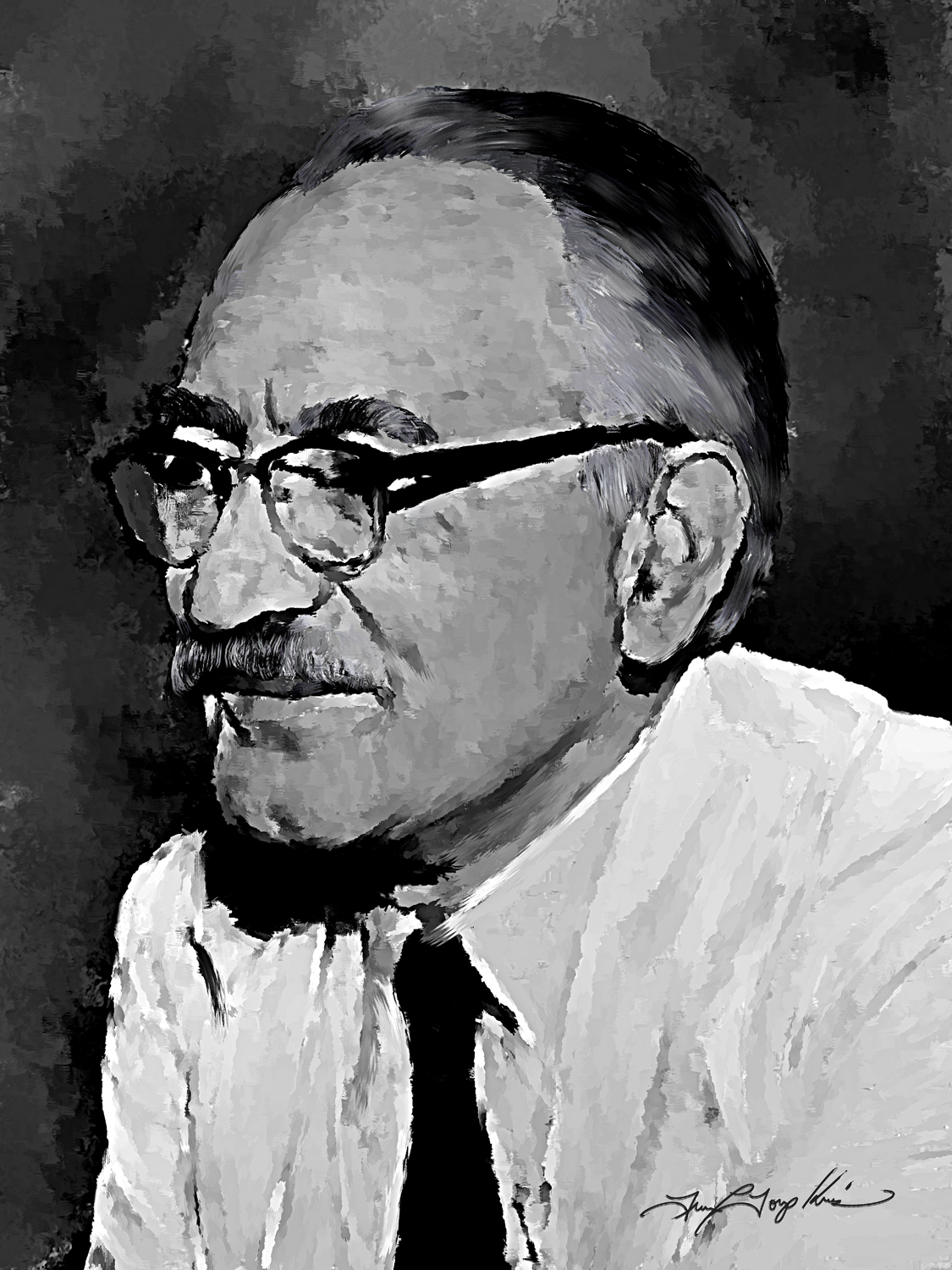
Painting Tim Tompkins PaintHistory.com
Selman A. Waksman
The Nobel Prize in Physiology or Medicine 1952
Ukrainian-born American Microbiologist, Biochemist. Isolated several
antibiotics including Streptomycin for Tuberculosis and Neomycin.
Proceeds earned from patents funded Waksman Institute of Microbiology and Waksman Foundation for Microbiology.
“The Lord hath created medicines out of the earth; and he that is wise will not abhor them. Ecclesiasticus, XXXVIII , 4”

Photo: Public Domain/Wikipedia
Felix Bloch Ph.D.
The Nobel Prize in Physics 1952
Nobel co-recipient: E. M. Purcell

Photo: public domain/Wikipedia
Edward M. Purcell B.S.E.E.,Ph.D.
The Nobel Prize in Physics 1952
Nobel co-recipient Felix Bloch

Painting Tim Tompkins – PaintHistory.com
Glenn T. Seaborg Ph.D.
The Nobel Prize in Chemistry 1951
National Medal of Science – Chemistry 1991
Nobel co-recipient: Edwin M. McMillan
Nuclear Chemist. Transuranium – Plutonium. Isotopes identification.
Actinide concept. Atomic Bomb. Peaceful use of atomic energy. Advisor to 10 US Presidents. Swedish ancestry. Journal since age 8 yrs. Hiking.
Franck Report: “I
had joined a committee of scientists who advocated the use of the
atomic bomb for demonstration purposes. We hoped the enemy would see the
destructive power of this weapon and immediately surrender. In June,
1945, we attempted to deliver our plan, the Franck Report, to President
Truman. I don’t know if he ever saw our work…”

Photo: Wiki Painting Tim Tompkins – PaintHistory.com
Edwin M. McMillan Ph.D.
The Nobel Prize in Chemistry 1951
National Medal of Science – Physical Sciences 1990
Nobel co-recipient: Glenn T. Seaborg
Drawing: Newton Llorente
William F. Giauque Ph.D.
The Nobel Prize in Chemistry 1949

Photo: Wikipedia commons
Mahathma Gandhi
‘Missing Laureate’ 1948 [Nobel Peace Prize]
Hero to innumerable peace activists including Nobelists: Martin
Luther King Jr., Pérez Esquivel, Dalai Lama, Suu Kyi, Nelson Mandela.
1948, Nobel Committee diplomatically declared, “no suitable living candidate”.
Geir Lundestad, Secretary, Norwegian Nobel Committee, 2006: Gandhi could do without Nobel, whether Nobel committee can do without Gandhi is the question.

Painting Tim Tompkins – Painthistory.com
Carl F. Cori M.D.
The Nobel Prize in Physiology or Medicine 1947
Co-nobelists Gerty Cori, Bernardo Houssay

Painting; Tim Tomplins – PaintHistory.com
Gerti T. Cori M.D.
The Nobel Prize in Physiology or Medicine 1947
Co-nobelists Carl Cori, Bernardo Houssay

Painting Tim Tompkins – PaintHistory.com
Hermann Joseph Muller Ph.D.
The Nobel Prize in Physiology or Medicine 1946
Geneticist. Production of mutations by X-ray irradiation.
“Do you consider it possible to discover a cosmic ray which –
applied to humanity – would cause a mutation making it peace-loving and
suited to happy relationships? You’ll be awarded another Medicine and
many Peace Nobels!” – Sigurd Curman, Banquet Speech

Photo Wiki Painting Tim Tompkins – PaintHistory.com
John Northrop Ph.D.
The Nobel Prize in Chemistry 1946
Co-Nobelist James B. Sumner, Wendell M. Stanley

Photo Wiki. Painting Tim Tompkins PaintHistory.com
James B. Sumner Ph.D.
The Nobel Prize in Chemistry 1946
co-nobelists John H. Northrop, Wendell M. Stanley

Photo Wiki. Painting Tim Tompkins – PaintHistory.com
Percy Bridgman Ph.D.
The Nobel Prize in Physics 1946

Painting Tim Tompkins – PaintHistory.com
Sir Alexander Fleming M.B., B.S.
The Nobel Prize in Physiology or Medicine 1945
Co-Nobelists: Ernst B. Chain, Sir Howard Florey
Physician – Bacteriologist, Immunologist. While researching
Influenza virus, made ground breaking discovery: penicillin, by not
neglecting chance observation – mould contaminating culture plate. WWI
caused interest in Antiseptics. WWII, production cost was immaterial.
Destiny.
Lone worker gets idea; details developed by team, but prime idea is due to enterprise, thought, perception of an individual.

Painting Wiki Tim Tompkins – PaintHistory.com
Joseph Erlanger
The Nobel Prize in Physiology or Medicine 1944
Nobel co-recipient Herbert S. Gasser
Physician, Physiologist. Single nerve fibers highly differentiated
functions. Cathode-ray oscillograph study of nerve action potentials.
Circulatory system electrophysiology. Recording sphygmomanometer.
Auriculo-ventricular bundle functions. Pulse pressure influence on
kidney secretion, orthostatic albuminuria. Sound production in arteries.
Metabolism with shortened intestines. Traumatic shock.
Career “fraught with series of fortunate circumstances, fortunate decisions.”

Photo Wiki. Painting Tim Tompkins PaintHistory.com
Isidor Isaac Rabi Ph.D.
The Nobel Prize in Physics 1944

Photo Wiki. Painting Tim Tompkins PaintHistory.com
Herbert S. Gasser M.D.
The Nobel Prize in Physiology or Medicine 1944
Co-Nobelist Joseph Erlanger
Physician, Electrophysiologist, Pharmacologist. Discovered
differentiated functions of single nerve fibers. Two types of nerve
fibers with different thicknesses; thicker fibers convey nerve impulses
fast.
Two times for working on a problem – before anyone has thought of
it and after everyone else has left it – result: innovator or finalist.
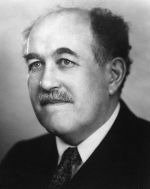
Photo: public domain/Wikipedia
Otto Stern Ph.D.
The Nobel Prize in Physics 1943

Photo Wiki Painting – Tom Tompkins – PaintHistory.com
Clinton Davisson Ph.D.
The Nobel Prize in Physics 1937
Co-nobelist George Paget Thomson

Drawing: Newton Llorente
Peter Debye Ph.D.
The Nobel Prize in Chemistry 1936
National Medal of Science – Physical Sciences 1966

Photo Smithsonian. Painting Tim Tompkins – PaintHistory.com
Carl D. Anderson Ph.D.
The Nobel Prize in Physics 1936
Co-Nobelist Victor F. Hess

Painting Tim Tompkins – PaintHistory.com
Harold C. Urey Ph.D.
The Nobel Prize in Chemistry 1934
National Medal of Science – Physical Sciences 1964

Photo Wiki. Painting Tim Tompkins – PaintHistory.com
George R. Minot M.D.
The Nobel Prize in Physiology or Medicine 1934
Co-nobelists George H. Whipple, William P. Murphy
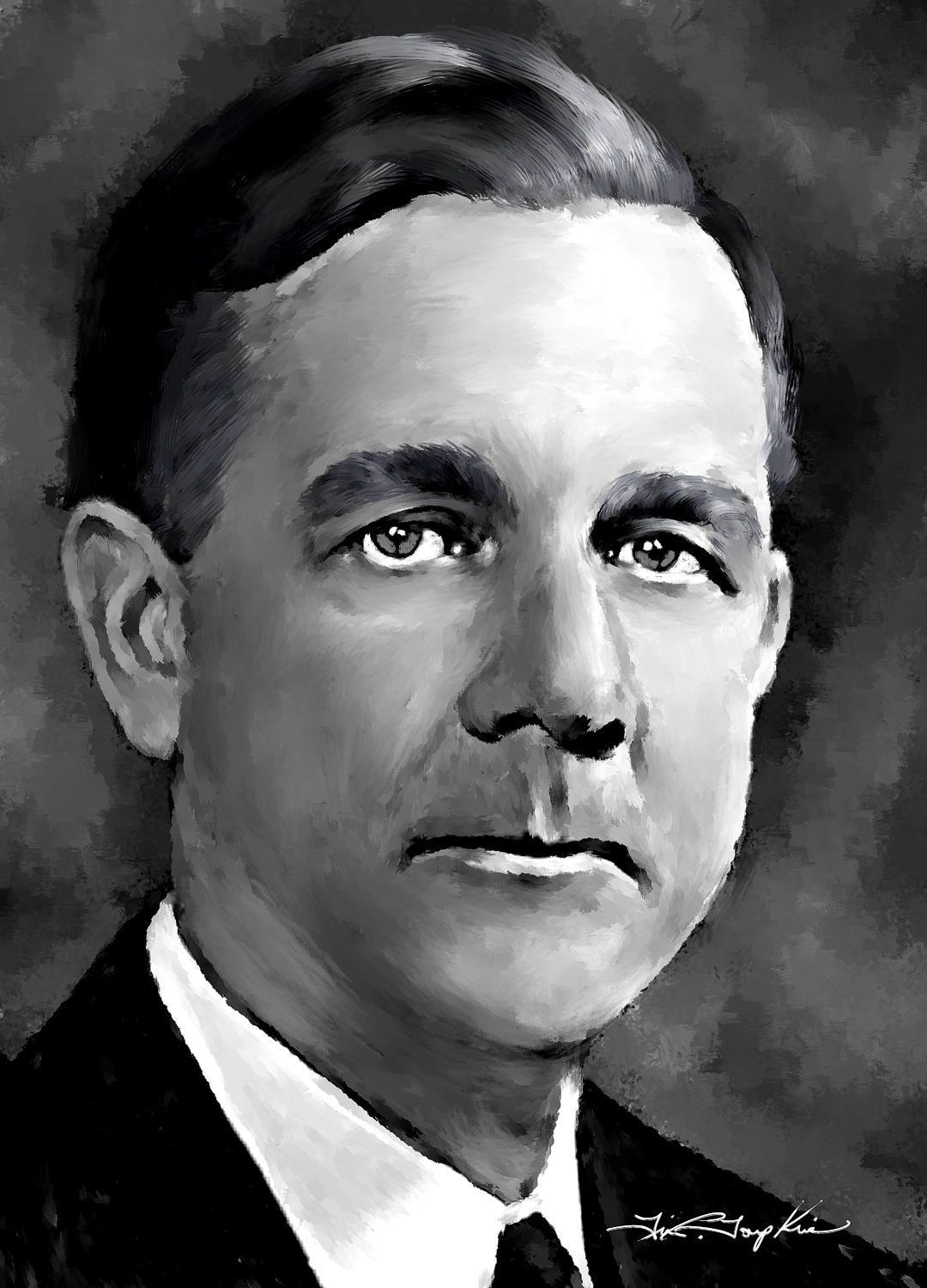
Photo Wiki. Painting Tim Tompkins – PaintHistory.com
George H. Whipple M.D.
The Nobel Prize in Physiology or Medicine 1934
Co-Nobalists George R. Minot, William P. Murphy
Physician; Pathologist. Pernicious anaemia liver therapy. Whipple
Disease. Intestinal parasites. Blackwater fever. WWII, Chloroform
anesthesia induced liver necrosis. Liver regeneration. Tuberculosis.
Pancreatitis. Used Nobelists Joliot Curie’s, Fermi’s, E.O. Lawrence’s
radioactive isotopes; discovered iron metabolism; protein metabolism,
distribution, functions. Bile constituents. Red cell stroma.
Gentle. Quiet. Wanted to be remembered as teacher.

Painting Tim Tompkins – PaintHistory.com
Thomas H. Morgan Ph.D.
The Nobel Prize in Physiology or Medicine 1933
Zoologist, Geneticist. Chromosome role in heredity, sex
determination. Drosophila. Genes stored in chromosomes in nuclei.
Epigenetics. Combination rule. Limited number of combination groups.
Crossing-over rule. Linear arrangement of genes in chromosomes.
Didn’t attend Nobel award ceremony, because in Caltech, busy
establishing new physiology group and with future of biochemistry,
genetics.

Photo Wiki. Painting Tim Tompkins – PaintHistory.com
Irving Langmuir Ph.D.
The Nobel Prize in Chemistry 1932

Photo Bachrach Studios, Wiki. Painting Tim Tompkins – PaintHistory.com
Karl Landsteiner
The Nobel Prize in Physiology or Medicine 1930
Physician – Anatomic Pathologist, Father of Immunology. ABO Blood
Groups, Rh Typing. Paroxysmal Haemoglobinuria. Polio. Spirochaetes.
Chemistry into service of serology. Meticulous observation, description,
understanding in many fields.
Rigorously demanding of himself. Energetic. By nature somewhat pessimistic, preferred to live away from people.
Characteristic of him – died pipette in hand.

Painting Tim Tompkins – PaintHistory.com
Sir Chandrasekhara Venkata Raman M.A. [Physics]
The Nobel Prize in Physics 1930
Atomic Physicist. Molecular Diffraction of Light. Raman Effect.
Structure, optical behaviour of iridescent substances. Acoustics,
violin.
Raman lost Nobel Prize money to fraudulent financer. Meeting fraudster
years later, he said: You deserve Nobel Prize for your cunning in duping
Nobel Laureate!
Playful comment: Unfortunately Economics Nobel instituted later in 1969!

Photo Wiki. Painting Tim Tompkins – PaintHistory.com
Author H. Compton Ph.D.
The Nobel Prize in Physics 1927
Co-nobelist C.T.R. Wilson
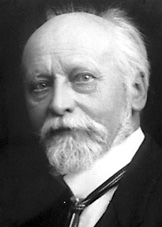
Photo: nobelprize.org
Ludwig Quidde
The Nobel Peace Prize 1927
Nobel co-recipient Ferdinand Buisson
Historian. Member, German Parliament. Professor, Berlin University
“…Kant found the only assurance for peace in the idea that war
would become so terrible and unbearable that human beings, even though
they remain as morally weak as they now are, would be forced to work
together for peace…”
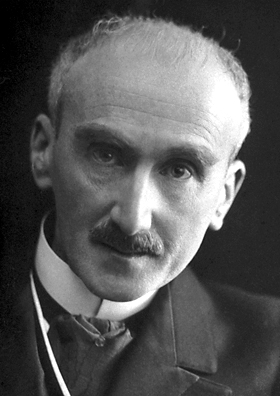
Photo: Nobelprize.org
Henri Bergson
The Nobel Prize in Literature 1927
Philosopher, Essayist wrote in French. Rich and vitalizing ideas and
brilliant skill in presentation. President, Commission for Intellectual
Cooperation of League of Nations.
Philosophical system demonstrating Nobel’s
idea of acknowledging with his Prizes, not human deeds but new ideas
revealed through select personalities. Regain for man’s consciousness
the divine gift of intuition and to put reason in its proper place:
serving and controlling ideas.

Photo: Nobelprize.org
Grazia Deledda Ph.D.
The Nobel Prize in Literature 1926
Italian writer. Idealistically inspired writings picture life with
clarity. With depth and sympathy deal with human problems in general.
Criticize moral norms and social values, but not criticize people who
are victims of circumstances. Pet crow.
Constant faith in humankind and in God

Drawing: Newton Llorente
James Franck Ph.D.
The Nobel Prize in Physics 1925
Co-nobelist Gustav Hertz

Painting Tim Tompkins – PaintHistory.com
Willem Einthoven Physician
The Nobel Prize in Physiology or Medicine 1924
Physician, Physiologist. Discovered electrocardiogram [EKG/ECG] mechanism. It was known that heart generates weak electrical current varying in health, heart disease. Invented galvanometer recording these currents. Named electrical waves P, Q, R, S, T. [P petite; next letters in alphabet]. Interests: Physics, Acoustics, Asthma, Optics, Physical activity. Great concentration. Generous, Kind.

Photo Wiki. Painting Tim Tompkins PaintHistory.com
Robert A. Millikan Ph.D.
The Nobel Prize in Physics 1923
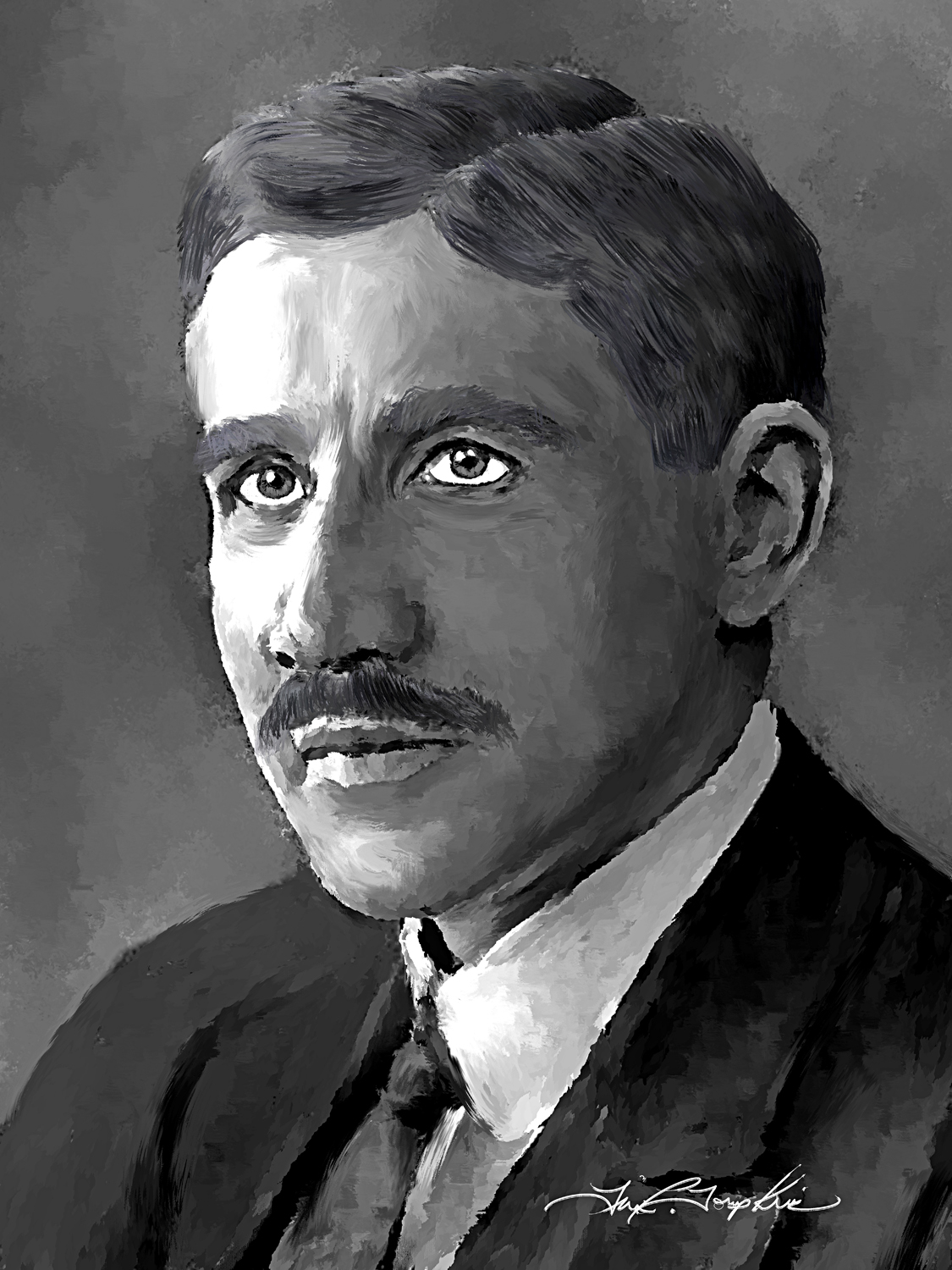
Painting: Tim Tompkins – PaintHistory.com
Otto F. Meyerhof
The Nobel Prize in Physiology or Medicine 1922
Nobel Co-recipient Archibald V. Hill
Physician. Energy conversions in muscle. Fine experimenter, Physiological Chemist.
Science should know no national barriers and prejudices. Scientists
should pour oil smoothing real wisdom and rational self-reflection in
agitated waves of national passions of people. This ethos of objectivity
causes mutual understanding among nations. Consider all Nobel Prizes,
‘Peace’ Prizes.
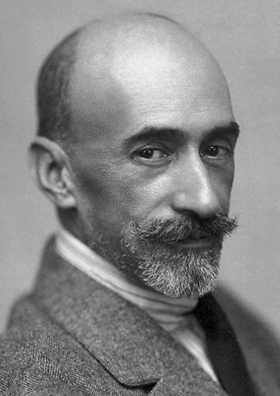
Photo: Nobelprize.org
Jacinto Benavente
The Nobel Prize in Literature 1922
Spanish dramatist. In happy manner he continued the illustrious
traditions of the Spanish drama. Chiefly writer of comedies of manners
and of one-act farces. Upon pediatrician father, at death, leaving
comfortable income, he abandoned law studies.
“You meet the warrior when in battle but it is not until victory that you meet the gentleman”.

Painting Tim Tompkins – PaintHistory.com
Fridtjof Nansen
The Nobel Peace Prize 1922
Zoologist – Neuroscientist, Polar Explorer, Oceanographer,
Humanitarian. ‘Nansen Passports’ for stateless refugees. Despite Russia
then being suspect in Western nations, relief for 7,000,000 to
22,000,000 Russians dying of famine.
Ministered to refugees – methods became classic: custodial care,
repatriation, rehabilitation, resettlement, emigration, integration.
Love of mankind is politics in practice.

Painting Tim Tompkins – PaintHistory.com
Anatole France
The Nobel Prize in Literature 1921
Novelist, storyteller; almost all genres. Nobility of style,
profound human sympathy, true Gallic temperament. Historical fiction
evokes past civilizations with great charm, deep insight.
Post-World
War I. At Nobel ceremony Frenchman France turned to Nobelist, German
Nernst, exchanged a long and cordial handshake with him – a profoundly
symbolic gesture.

Photo: Anders Beer Wilse 1865-1949 Painting Tim Tompkins – PaintHistory.com
Knut Pedersen Hamsun
The Nobel Prize in Literature 1920
Norwegian writer. In youth, poverty stricken. Little formal
education. Leader of Neo-Romantic revolt. Promoted individualism.
Exciting description of nature.
“I sat looking at her with rapt attention. What a wonderful
pleasure to be sitting in a human dwelling again, and talk with a lively
young girl instead of with myself!”

Photo: nobelprize.org
Carl Gustaf Verner von Heidenstam
The Nobel Prize in Literature 1916
Swedish Poet, Writer. New era in Swedish literature. Perspectives to
inner life. Love for ancestral hearth and for home of one’s birth most
strongly links man to life.
“O Man, you will become wise only when you reach the summit of the evening-cool heights where all the earth is beheld”

Photo Wiki. Painting Tim Tompkins – PaintHistory.com
Theodore Richards Ph.D.
The Nobel Prize in Chemistry 1914
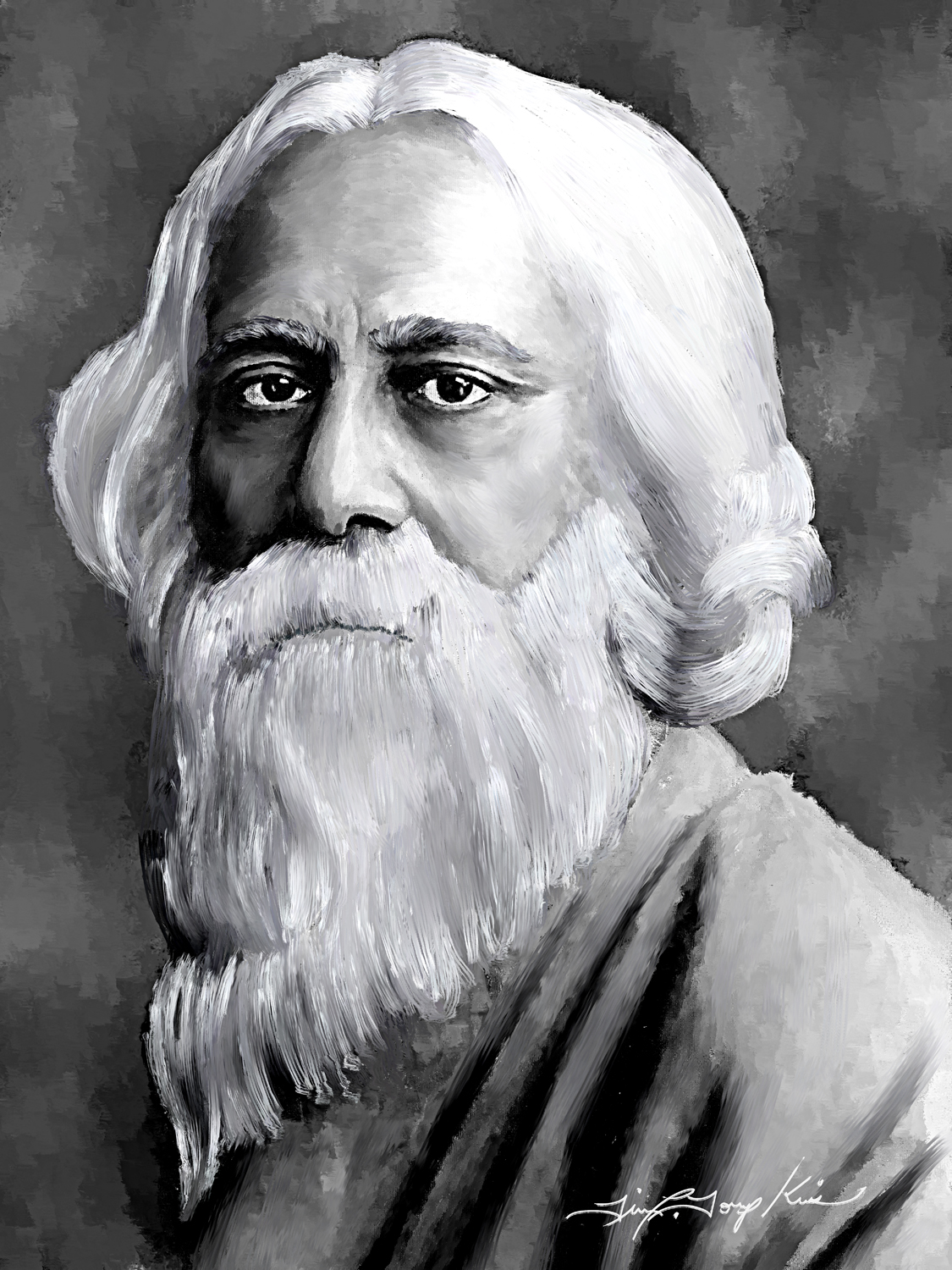
Painting Tim Tompkins – PaintHistory.com
Rabindranath Tagore
The Nobel Prize in Literature 1913
Indian Poet, Bangali, English. All literary genres. Voice of India’s
Spiritual Heritage. Social reformer. Promoted gender equality,
empowerment of women. Indian National Movement participant. Mahathma
Gandhi was his devoted friend. Founder, school in Shantiniketan.
Author, National Anthem of India, Bangladesh, Sri Lanka.
“Love does not claim possession, but gives freedom.”
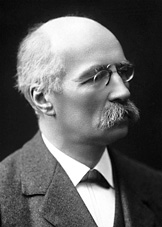
Photo: nobelprize.org
Henri La Fontaine
The Nobel Peace Prize 1913
Lawyer, Socialist, Parliamentarian, Peace Activist. International Peace Bureau. Internationalism, “An Intellectual Parliament” for Humanity. Cofounder, Institut international de bibliographie. Education. Women’s rights. Labor. Cultural achievements.
When Germany invaded Belgium, 1914, “Peoples will be as before, the sheep sent to the slaughterhouses or to the meadows as it pleases the shepherds.”
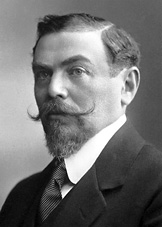
Photo: nobelprize.org
Alfred Fried
The Nobel Peace Prize 1911
Nobel Co-recipient Tobias Asser
Publisher, Philosopher. Founder, Die Friedenswarte (peace publication). Permanent Court of Arbitration, Netherlands. Collaborator, Nobelist Bertha von Suttner. Propaganda for peace: war was proof of validity of pacifistic analysis of world politics.
War is not in itself a condition so much as the symptom of a condition, that of international anarchy.
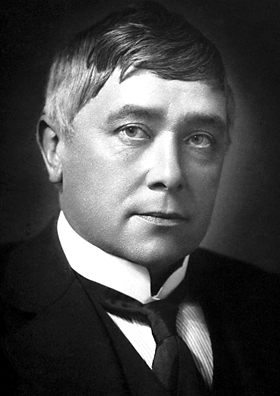
Photo: nobelprize.org
Count Maurice (Mooris) Polidore Marie Bernhard Maeterlinck
The Nobel Prize in Literature 1911
Belgian writer in French. Lawyer. Many-sided literary activities.
Dramatic works distinguished by a wealth of imagination. Poetic fancy.
Reveals deep inspiration. Appeals to readers’ own feelings, stimulates
their imaginations.
When we lose one we love, our bitterest tears are called forth by the memory of hours when we loved not enough.
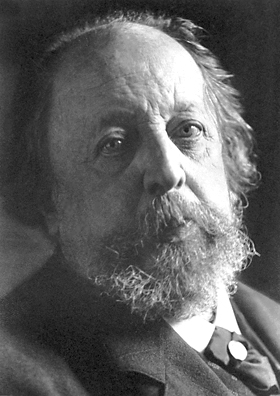
Photo: nobelprize.org
Paul Johann Ludwig Heyse
The Nobel Prize in Literature 1910
German writer: drama, poetry, prose. World-renowned short stories. Idealism. Consummate artistry permeated with idealism. Philology. Doctorate for dissertation on the refrain in Provençal poetry. Nobleman.
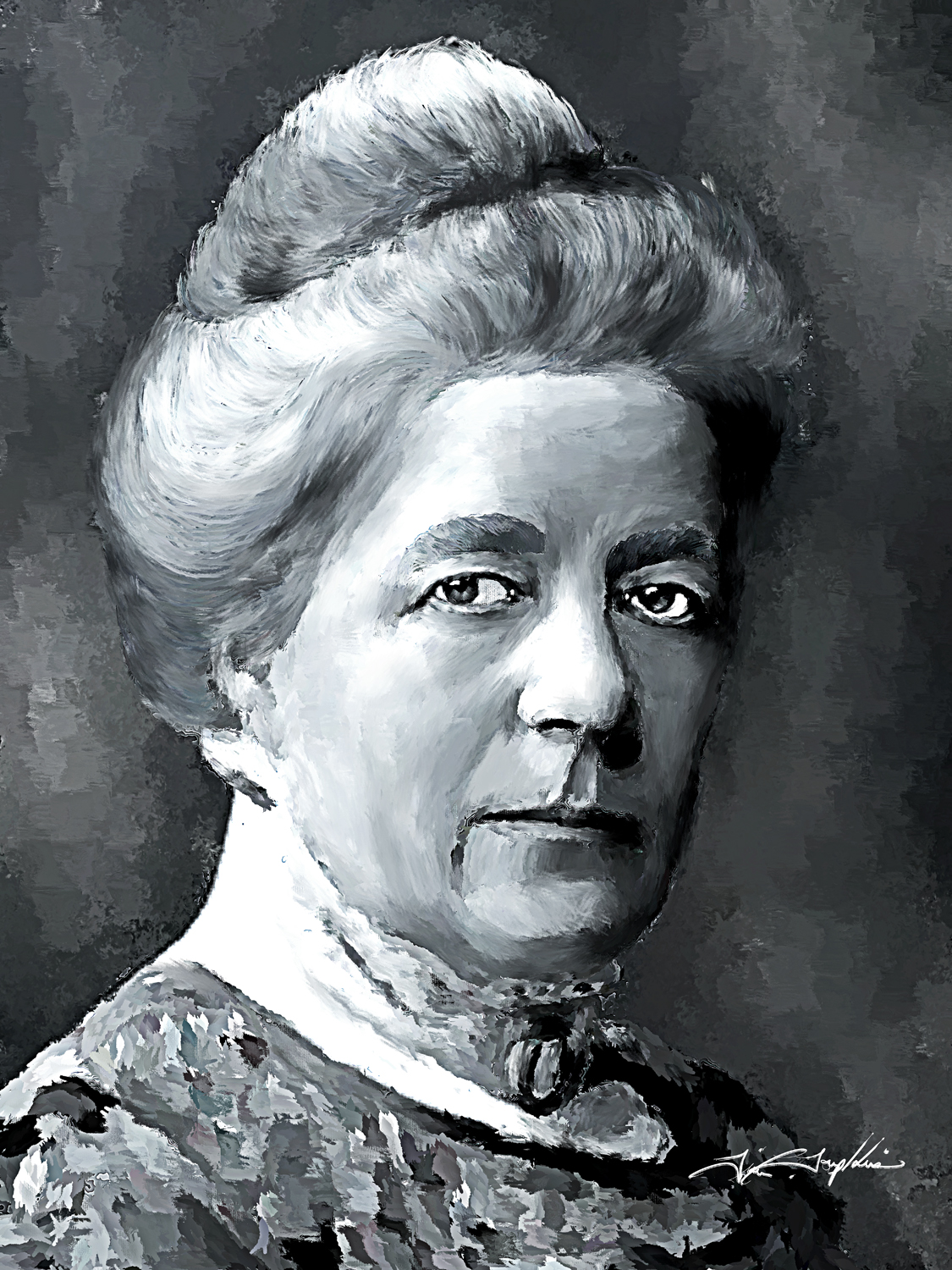
Lagerlof Selma Painting Tim Tompkins – PaintHistory.com
Selma Ottolia Lovisa Lagerlöf
The Nobel Prize in Literature 1909
Author. Lofty idealism, vivid imagination. Described peasant life,
Nordic nature accompanied by ethical strength, deep religious feeling.
Respect for Nature, Women’s Causes. 1914, became member of the Swedish
Academy which awards Nobel Prize for Literature.
“Nothing on earth can make up for the loss of one who has loved you.”
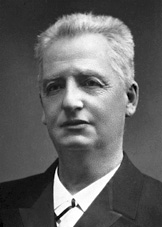
Photo: nobelprize.org
Klas Pontus Arnoldson
The Nobel Peace Prize 1908
Nobel Co-recipient Fredrik Bajer
Parliamentarian, writer. Founder, Swedish Peace and Arbitration League. Inspiring orator.
Without peace there is no freedom, individual or national. War and
hostilities are a form of slavery. Under such conditions, laws are
silent. Without peace there is nothing truly human. Peace is harmony.
Harmony is the highest ideal of life.

Photo: Library of Congress
Rudolf Christoph Eucken
The Nobel Prize in Literature 1908
Writer, Philosopher.
Idealism raises our life to greatness above the hubbub of everyday
life by representation of eternal truths; in midst of our dark situation
it can strengthen our belief in reason of life. Only faith can enable
us to cope with enormous obstacles, fill us with confidence of success.

Photo: Wiki. Painting Tim Timpkins – PaintHistory.com
Ilya Mechnikov Ph.D.
The Nobel Prize in Physiology or Medicine 1908
Nobel Co-recipient Paul Ehrlich
Ukrainian Zoologist. Theory of cellular immunity. Father of Natural
immunity. Research: Comparative embryology, Phagocytosis, Anthrax,
Rabies.
Weak eyesight, heart troubles, difficulties in University lead to
pessimism. Twice attempted suicide. Discovery of phagocytosis completely
changed his outlook on life; abandoned his pessimistic philosophy and
determined to find further proof of hypothesis.
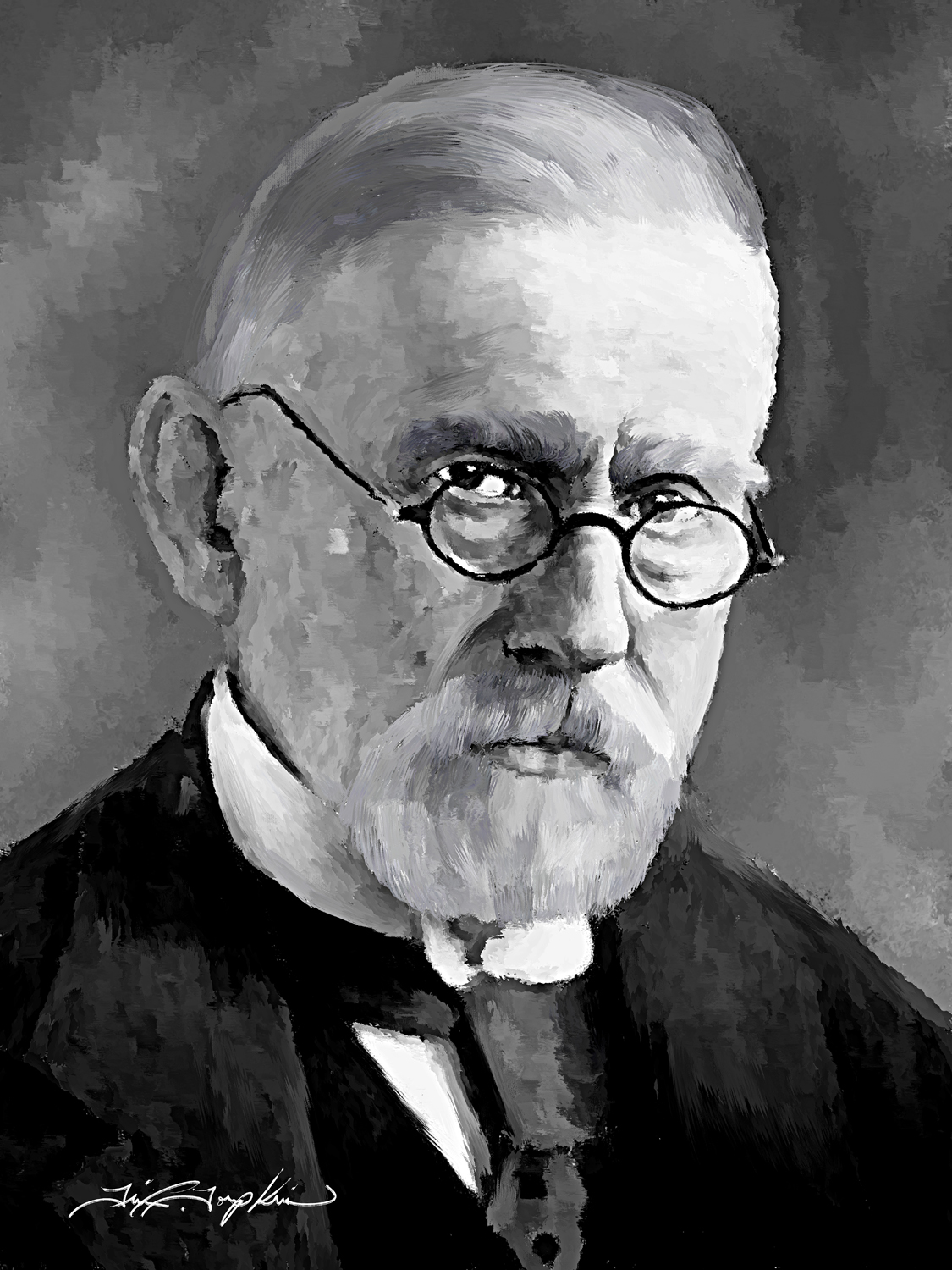
Painting Tim Tompkins – PaintHistory.com
Paul Ehrlich
The Nobel Prize in Physiology or Medicine 1908
Nobel co-recipient Ilya Mechnikov
Physician, Scientist. Immunologist, Hematology pioneer. Founded
Chemotherapy. Classified stains.
Stained tissues, blood cell granules, tubercle bacillus. Standardized
sera. Idea: Drugs’ chemical constitution related to action, affinity for
cells against which directed.
“Schwann established cell as biological unit. Concept of cell is axis around which whole modern science of life revolves”

Photo: nobelprize.org
Louis Renault
The Nobel Peace Prize 1907
Nobel Co-recipient Ernesto Teodoro Moneta
‘Oracle of International Law’. Practical Promoter of Peace. Teacher,
judge, diplomat. International: private law, transport, military
aviation, naval affairs, commercial paper used in international
transactions.
Jurists, journalists can pave way for reform of nefarious
practices, influencing nation to give up barbaric measures which its
government has been unwilling to renounce.

Painting Tim Tompkins – PaintHistory.com
Albert A. Michelson Ph.D.
The Nobel Prize in Physics 1907
Photo: Wikiphedia
Giosuè Carducci
The Nobel Prize in Literature 1906
Nobel Co-recipient Ernesto Teodoro Moneta
Poet, Senator. Wrote poetry as child. Excellent translator, literary historian, orator. Conducted research in every phase of literature and eloquently expressed his findings. Poetry inspired compatriots in war for Italian independence, enjoyed immense popularity at home and abroad. Greatest Italian literary figure in the latter part of the nineteenth century.

Painting: Tim Tompkins PaintHistory.com
Theodore Roosevelt
The Nobel Peace Prize 1906
President, USA. International Peace Arbitrator, various treaties.
Vigorous, businesslike. “We abhor bully, oppressor, in private or public
life”. Conservationist, protected 230,000,000 acres of public land.
After camping in Yosemite National Park, “It was like lying in a great solemn cathedral, far vaster and more beautiful than any built by man.”
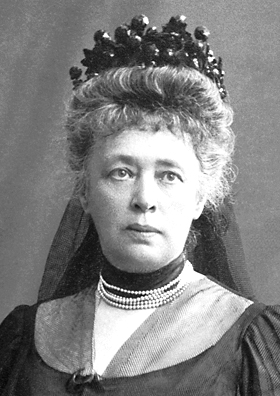
Photo: nobelprize.org
Bertha von Suttner
The Nobel Peace Prize 1905
Generalissimo, Peace Movement. Author, ‘Lay Down Your Arms‘.
Permanent International Peace Bureau. Vigorously opposed militaristic
traditions. Eternal truth: happiness created, developed in peace.
Eternal right: individual’s right to live.
“Inform me, convince me, and then I will do something great for the movement”, Alfred Nobel said to Bertha von Suttner.”

Photo Wiki. Painting Tim Tompkins PaintHistory.com
Niels Ryberg Finsen M.D.
The Nobel Prize in Physiology or Medicine 1903
Physician. Founder, phototherapy in dermatology. Lupus vulgaris treatment. Researched salt. Despite having Niemann-Pick disease,
strong willed, persevering.
Denmark early education – Rector: “Niels is a very nice boy. His gifts
are small; he’s devoid of energy.” Cause: fagging for older pupils.
Moved to Iceland school;
succeeded despite not knowing language.
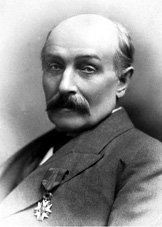
Photo: nobelprize.org
Randal Cremer
The Nobel Peace Prize 1903
Co-founder, Inter-Parliamentary Union. Secretary, International Arbitration League. British Parliamentarian. World organizing. Prevent war. Founder, Amalgamated Society of Carpenters and Joiners.
Upon entering into treaties of arbitration, the disputants would
have time for reflection, for while arbitrators were deliberating,
passions of contending parties would cool and chances of war greatly
diminished.
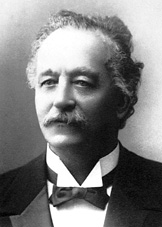
Photo: nobelprize.org
Élie Ducommun
The Nobel Peace Prize 1902
Nobel co-recipient Albert Gobat
Permanent International Peace Bureau [1910 Nobel Peace Prize]. Nobelist Passy’s
description: “exactitude, firmness.” History Demonstrates War’s
Futility. Predicted, 1901: Despite modern weapons’ destructiveness, wars
will ebb, flow. Alfred Nobel’s Contemporary.
Nobel Chairperson Løvland, “You Swiss, with your sense of life’s
realities, have special gift for taking ideas from realm of dreams and
turning them into realities.”
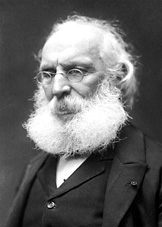
Photo: nobelprize.org
Frédéric Passy
The Nobel Peace Prize 1901
Alfred Nobel’s
contemporary. Apostle of Peace, Humanitarian, Economist, Lawyer,
Politician. Founder, French peace society. Free trade between
independent nations promotes peace. Inspired by Nobelist Randal Cremer.
Opposed France’s colonial policy. 1905 Sweden-Norway conflict,
declared, ‘…peaceful solution will make me hundred times happier than
when I received Nobel Prize…’ Wish fulfilled.

Painting Tim Tompkins – PaintHistory.com
Ronald Ross, Physician
The Nobel Prize in Physiology or Medicine 1902
Physician. Mosquitoes’ malarial parasites life-cycle. Mathematical
models for epidemiology. Malaria prevention. Contributed to pure,
applied mathematics.
‘My microscope was worn out, screws rusted with sweat from hands,
forehead; remaining eye-piece cracked; invaluable oil-immersion lens
remained good.’
‘Dingy military hospital, cracked microscope, medicine bottles – only laboratory and apparatus I possessed.’

Painting Tim Tompkins – PaintHistory.com
Emil Adolf von Behring, Physician
The Nobel Prize in Physiology or Medicine 1901
Physician. Serum therapy, especially against diphtheria. Tuberculosis. Distinguished friends, associates: Friedrich Althoff, Prussian Under-Secretary, Education, Cultural Affairs; Ludolph Brauer, colleague, Internal Medicine, Marburg Medical Faculty; Friedrich Loeffler, bacteriologist; Ilya Mechnikov, 1908 Medicine Nobelist, Russian researcher, discovered phagocytosis, exchanged ideas; Émile Roux, Louis Pasteur’s pupil, researched diphtheria; Erich Wernicke, friend, colleague.